
Choosing a blockchain for a new token is no longer just a technical decision. In 2026, the token standard you select can influence transaction costs, ecosystem access, wallet compatibility, development workflows, and how easily your project can grow.
For most token creators, the comparison often comes down to ERC-20 vs BEP-20.
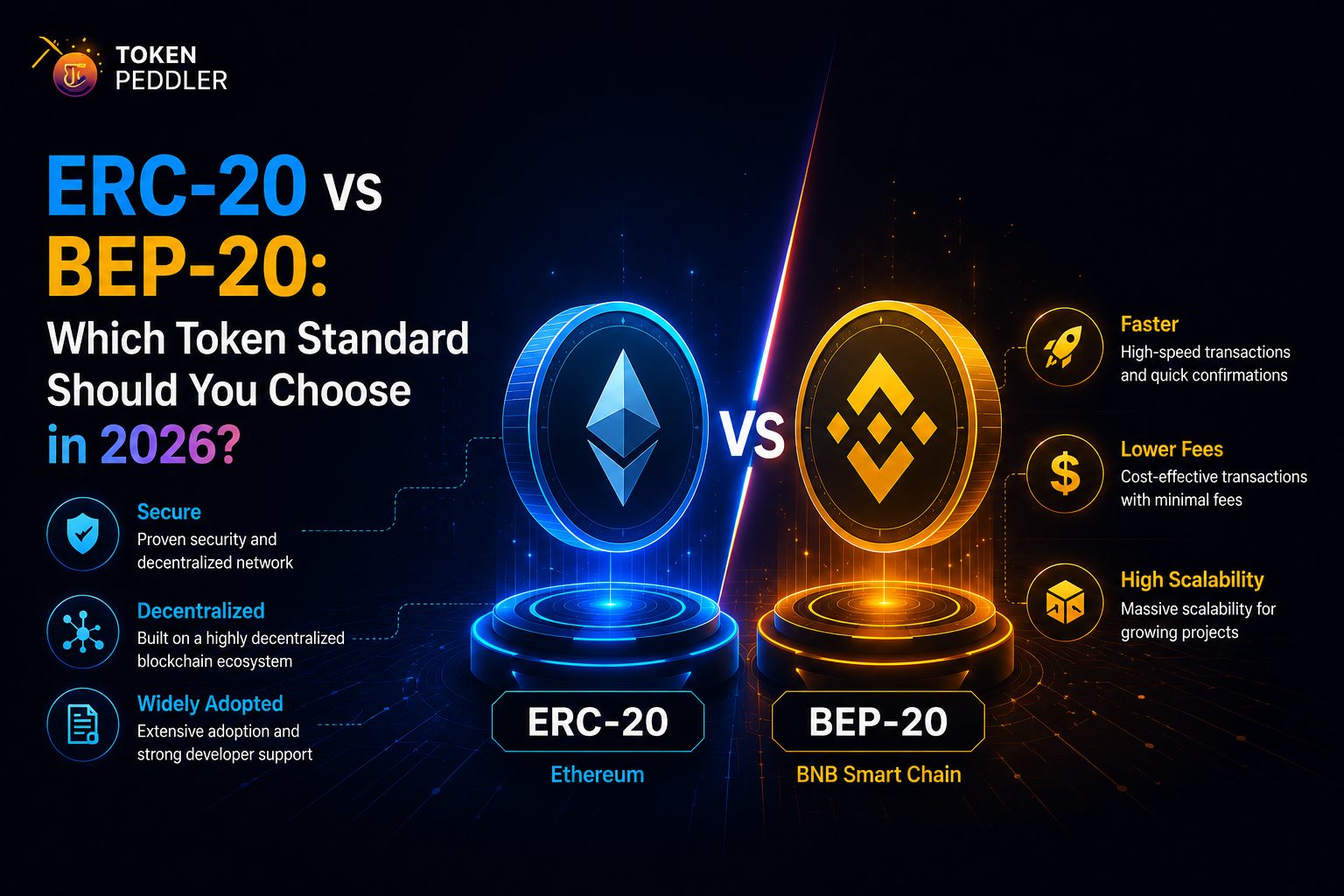
ERC-20 remains the most widely recognized token standard in the Ethereum ecosystem, while BEP-20 powers a large number of tokens across BNB Smart Chain. Both standards support fungible tokens and offer familiar capabilities such as transfers, approvals, and supply management. However, they are designed for different ecosystem priorities.
This guide breaks down the key differences between ERC-20 and BEP-20 to help developers, startups, and Web3 founders make a more informed choice in 2026. It also explains where tools such as a Sepolia ERC20 Token Creator, Testnet ERC20 Tokens, a bep20 token generator, and a BNB Smart Chain Token Generator can fit into the token development process.
Understanding ERC-20 and BEP-20
Before comparing the two, it helps to understand what a token standard actually does.
A token standard defines a common set of rules that a smart contract follows. These rules help wallets, decentralized applications, exchanges, and other blockchain tools interact with tokens in a predictable way.
What Is ERC-20?
ERC-20 is the standard commonly used for fungible tokens on Ethereum and Ethereum-compatible environments. It established a common interface for token operations, including transferring tokens, checking balances, approving spending permissions, and managing allowances.
One reason ERC-20 remains important in 2026 is the size and maturity of the Ethereum ecosystem. Projects can access established infrastructure, developer tools, decentralized finance protocols, wallets, and a broad user base.
Before deploying on a production network, many teams prefer to experiment with a Sepolia ERC20 Token Creator. This allows developers to create and test contracts in a lower-risk environment before committing to a live deployment. Working with Testnet ERC20 Tokens can help teams identify configuration issues, test wallet interactions, and validate the token experience.
What Is BEP-20?
BEP-20 is the token standard used on BNB Smart Chain. It is designed to be compatible with Ethereum’s broader smart contract development model, which makes the transition relatively familiar for developers who have previously worked with Solidity and ERC-20-style contracts.
For projects focused on lower transaction costs and faster confirmation times, BNB Smart Chain can be an attractive option. A bep20 token generator can simplify the token creation process by providing a guided way to configure standard token parameters.
Similarly, a BNB Smart Chain Token Generator can be useful for founders who want to create a token without manually writing every part of the smart contract from scratch.
ERC-20 vs BEP-20: The 5 Key Differences
| Comparison Point | ERC-20 | BEP-20 |
| Primary Ecosystem | Ethereum and its broader ecosystem | BNB Smart Chain ecosystem |
| Transaction Costs | Can be higher, depending on network activity | Generally lower and more predictable |
| Network Performance | Strong infrastructure with varying transaction costs and speeds | Designed for faster, lower-cost transactions |
| Testing Options | Developers can create Testnet ERC20 Tokens on environments such as Sepolia | Developers can use BNB Chain test environments before mainnet deployment |
| Best Fit | Projects prioritizing Ethereum ecosystem access and long-term interoperability | Projects prioritizing affordability and faster transactions |
The right choice depends less on which standard is “better” and more on what your project actually needs.
When Should You Choose ERC-20?
ERC-20 can be a strong choice when your project is closely connected to the Ethereum ecosystem.
For example, a DeFi project may benefit from Ethereum’s extensive infrastructure and deep ecosystem of protocols. A token designed for broad recognition may also find value in building around the ERC-20 standard because of its established support across wallets and blockchain applications.
However, cost planning is important. Deploying and interacting with smart contracts can become more expensive when network demand increases.
This is where proper testing becomes essential. Using a Sepolia ERC20 Token Creator before a mainnet launch can help developers understand the deployment flow and test contract functionality. Creating Testnet ERC20 Tokens also gives teams an opportunity to test token transfers, supply settings, minting logic, and wallet compatibility without putting real capital at risk.
For startups, this testing stage should not be treated as optional. A token contract may be technically simple, but an incorrect parameter, access-control setting, or supply configuration can create problems after deployment.
When Should You Choose BEP-20?
BEP-20 may be the better option for projects where affordability and transaction efficiency are major priorities.
Consider a project planning frequent token transfers, community rewards, airdrops, or other high-volume interactions. In such cases, lower transaction costs can make a meaningful difference to both the business and its users.
A bep20 token generator can make the creation process more accessible, especially for founders who understand their token requirements but do not want to build the entire contract manually. Users can typically focus on important decisions such as token name, symbol, supply, decimals, and selected functionality.
A BNB Smart Chain Token Generator can also reduce friction during the early development stage by offering a more structured deployment workflow. That said, no tool should replace careful review. Teams should still understand what their selected token settings do and test the contract before moving forward.
BEP-20 is particularly worth considering for projects that need a practical balance between smart contract functionality and transaction costs.
Development and Testing: Don’t Skip the Testnet Stage
One of the biggest mistakes token creators make is treating mainnet deployment as the first real test.
A better approach is to test the complete workflow before launching publicly.
For Ethereum-focused projects, a Sepolia ERC20 Token Creator can provide a practical starting point for testing token deployment. Teams can create Testnet ERC20 Tokens, connect wallets, perform transfers, and check how the token behaves across supported applications.
Testing should include more than confirming that the contract deploys successfully. Review areas such as:
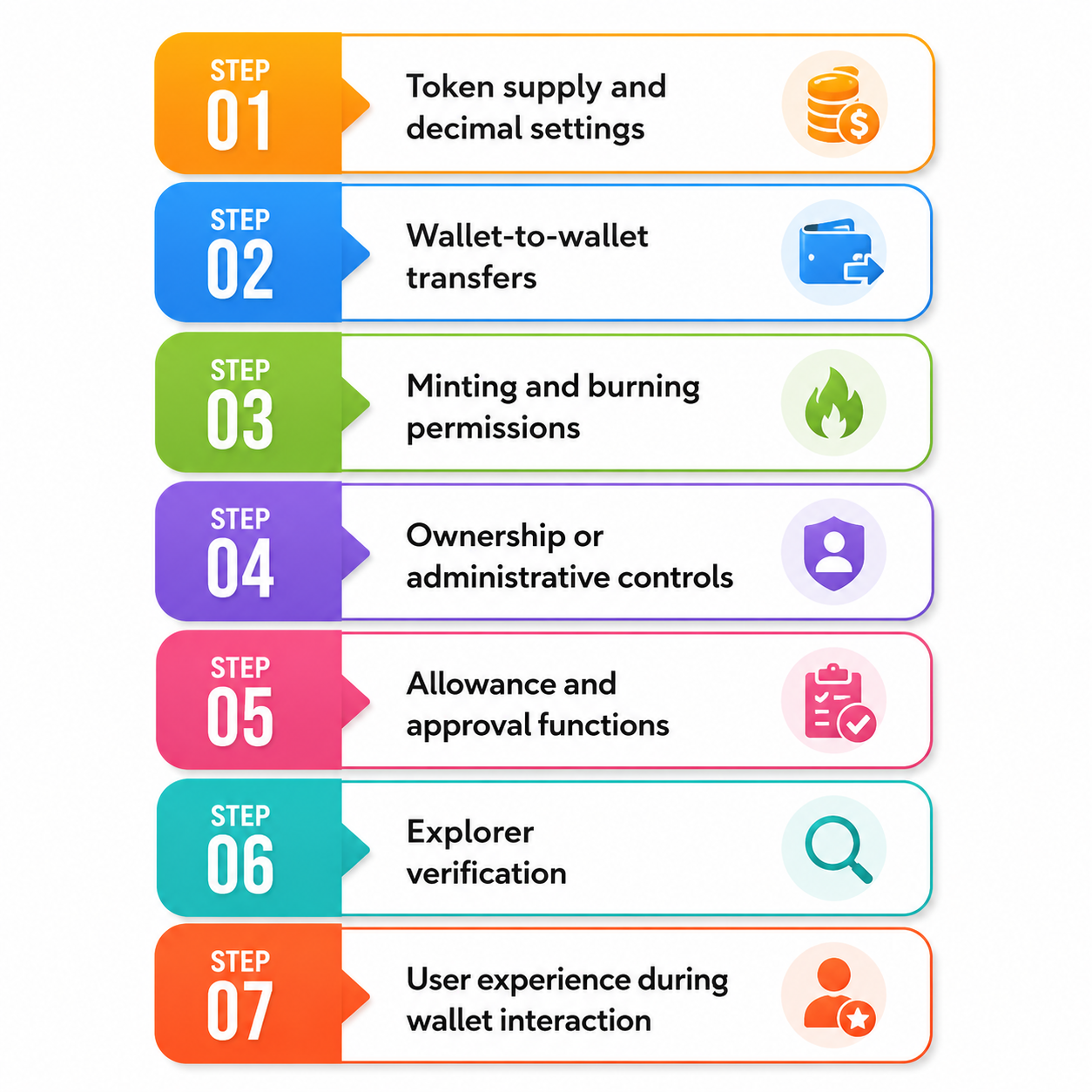
- Token supply and decimal settings
- Wallet-to-wallet transfers
- Minting and burning permissions
- Ownership or administrative controls
- Allowance and approval functions
- Explorer verification
- User experience during wallet interaction
The same principle applies to BEP-20 projects. Even when using a bep20 token generator or a BNB Smart Chain Token Generator, test the configuration carefully before committing to a production launch.
A token generator can simplify deployment, but it cannot make poor tokenomics or poorly considered permissions disappear.
Security and Token Configuration Matter More Than the Standard
The token standard is important, but it is only one part of a successful launch.
A well-designed ERC-20 token can still fail because of poor supply planning. Likewise, a BEP-20 token with low transaction costs can lose user trust if the smart contract gives administrators excessive control.
Before deployment, teams should clearly define:
- Who controls contract permissions?
- Can additional tokens be minted?
- Can tokens be burned?
- Is ownership transferable or renounced?
- Are special features necessary?
- Have the contract settings been independently reviewed?
The answers should be clear before users interact with the token.
This is also why no-code tools should be used thoughtfully. A Sepolia ERC20 Token Creator or bep20 token generator can improve accessibility, but responsible deployment still requires understanding the configuration choices.
How TokenPeddler Can Help
For creators who want a more straightforward path to token creation, TokenPeddler offers tools designed to simplify blockchain token deployment across supported networks.
For Ethereum testing, users can use a Sepolia ERC20 Token Creator workflow to experiment with Testnet ERC20 Tokens before moving toward a production environment. This can be useful for testing token settings and becoming familiar with the deployment process.
For BNB Smart Chain projects, TokenPeddler can also support creators looking for a bep20 token generator experience. Instead of starting with a blank smart contract, users can configure token details through a guided process. Its BNB Smart Chain Token Generator approach is particularly useful for teams that want a simpler starting point while retaining control over important token parameters.
The goal is not to remove the need for technical understanding, but to reduce unnecessary complexity around standard token creation.
ERC-20 vs BEP-20: Which One Should You Choose in 2026?
Choose ERC-20 if your project benefits most from Ethereum’s established ecosystem, broad infrastructure, and long-term interoperability. It is especially suitable for projects with strong DeFi connections or those prioritizing access to the wider Ethereum environment.
Choose BEP-20 if lower transaction costs and faster network interactions are more important to your project’s day-to-day operations. It can be a practical choice for communities, utility tokens, reward systems, and applications expecting frequent transactions.
The best approach is to start with your project requirements rather than the popularity of a particular blockchain.
If you are still evaluating your options, testing can provide valuable answers. Use a Sepolia ERC20 Token Creator to create Testnet ERC20 Tokens and understand the Ethereum-side workflow. For BNB Smart Chain, explore a bep20 token generator or BNB Smart Chain Token Generator to assess whether the network better matches your budget and transaction requirements.
Final Thoughts
In 2026, there is no universal winner in the ERC-20 vs BEP-20 debate.
ERC-20 offers access to one of the most established blockchain ecosystems, while BEP-20 provides an attractive environment for projects focused on efficient and cost-conscious transactions. The better standard is the one that aligns with your users, token utility, development resources, and long-term strategy.
Before launching, test thoroughly, review every contract setting, and avoid choosing a network simply because it is popular. Tools like TokenPeddler can make the creation process easier, but successful token launches still depend on sound planning, transparent tokenomics, and responsible execution.
Whether you begin with Testnet ERC20 Tokens or use a BNB Smart Chain Token Generator for your next project, taking the time to validate your token before launch can make a significant difference in the quality and credibility of the final product.