Deploying the coin on the Ethereum main net without adequate testing will be risky from both a technological and economic standpoint. Mistakes in smart contract coding, wallet problems, incorrect setting of the initial amount of tokens, transfer limitations, and inadequate management functions require modifications after deployment. For this reason, professional blockchain teams validate token functionality on testnets before any production release.
Sepolia is Ethereum’s leading public testnet for current development workflows. It enables teams to use contracts, perform transactions, link wallets, develop dApps, and analyze token behavior by employing test ETH rather than actual currency. It ensures an effective setup for testing purposes.
An Ethereum Sepolia Token Generator streamlines deployment by replacing manual coding with a guided setup process. Users can configure token settings and launch directly on Sepolia. Platforms such as Token Peddler help teams create ERC20 tokens, validate ownership controls, and prepare confidently for mainnet launch.
Why Sepolia Matters for Token Development?
The purpose of Ethereum testnets is to simulate blockchain operations without any real monetary loss for users. Sepolia testnet is commonly used due to its consistency with validators, wallet compatibility, and ecosystem activities.
Key Benefits of Sepolia:
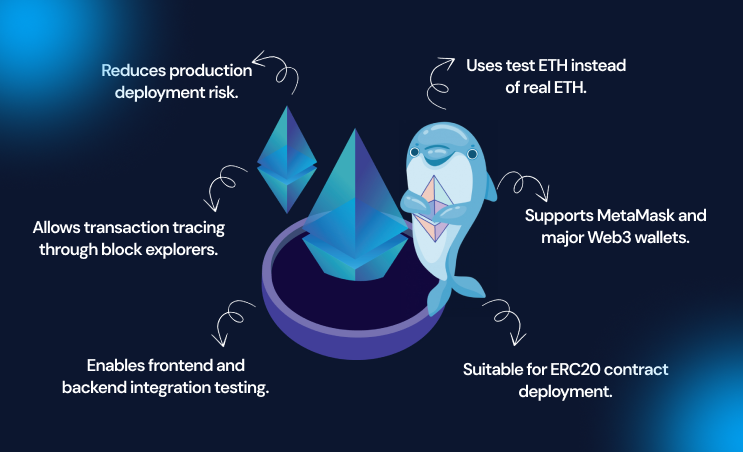
- Uses test ETH instead of real ETH.
- Supports MetaMask and major Web3 wallets.
- Suitable for ERC20 contract deployment.
- Enables frontend and backend integration testing.
- Allows transaction tracing through block explorers.
- Reduces production deployment risk.
For any team planning to launch equivalent assets, governance tokens, reward tokens, or utility assets, Sepolia provides a necessary environment.
What Is an Ethereum Sepolia Token Generator?
An Ethereum Sepolia Token Generator is a no-code or low-code token deployment platform that creates smart contracts based on selected parameters.
Instead of writing Solidity contracts line by line, users choose token settings such as:
- Token Name.
- Token Symbol.
- Initial Supply.
- Decimal Precision.
- Mintable Supply Rights.
- Burn Functions.
- Ownership Permissions.
- Freeze Controls.
- Tax Logic or Advanced Mechanics.
The platform then creates & launches a smart contract to the Sepolia Blockchain.
This process lets project stakeholders rapidly advance through prototyping stages, internal testing, presenting demos to investors, before doing community previews and validating pre-mainnet, and before releasing onto the main Ethereum blockchain.
Prefer Reading- Complete Guide to Test Ethereum Token Creation on the Sepolia Network
Understanding Ownership in Token Deployment
Ownership is one of the most critical elements of any token contract. The owner’s address typically controls core functions, depending on the contract’s design.
Typical owner permissions include:
- Minting new tokens.
- Freeze transfers.
- Changing fee wallets.
- Transferring ownership.
When using Token Peddler, ownership is generally assigned to the deploying wallet unless otherwise configured by the contract logic selected during setup. This means the wallet used for deployment becomes the administrative authority over enabled owner-controlled functions.
Why Ownership Must Be Planned Carefully?
Inefficient ownership planning creates operational problems such as:
- Lost access to admin functions.
- Centralization concerns from investors.
- Inability to update contract parameters.
- Security exposure if a wallet is compromised.
Recommended Ownership Controls
- Use a secure wallet for deployment.
- Store recovery credentials offline.
- Transfer ownership to multisig after testing.
- Renounce ownership only when appropriate.
- Document every permission enabled in the contract.
Step-by-Step Guide to Create an ERC20 Token on Sepolia
1. Prepare a Compatible Wallet
Go to Token Peddler or another Ethereum-compatible wallet.
Add the Sepolia network if needed:
- Network Name: Sepolia
- Chain ID: 11155111
- Currency Symbol: ETH
Switch the wallet to Sepolia before beginning deployment.
2. Obtain Spolia Test ETH
Gas fees on Sepolia are paid in test ETH.
Use a trusted faucet to fund the deployment wallet. Most ERC20 deployments require only a modest balance.
Recommended range:
- Basic token: 0.02 ETH
- Advanced token with added logic: 0.05 ETH or more
3. Open the Generator Platform
Navigate to the Sepolia token generator page from Token Peddler and connect your wallet.
Choose the required token structure, such as:
- Standard ERC20 Token.
- Mintable ERC20 Token.
- Burnable ERC20 Token.
- Ownership-Controlled Token.
- Advanced Token with additional controls.
4. Enter Core Token Details
To create an ERC20 token, define the primary parameters carefully.
Example:
- Token Name: Demo Rewards Token
- Symbol: DRT
- Supply: 50,000,000
- Decimals: 18
These values influence wallet display, token accounting, and future integrations.
5. Configure Administrative Controls
Select whether the token owner can:
- Mint additional supply.
- Burn held the supply.
- Freeze transactions.
- Restrict addresses.
- Modify fee settings.
Only activate controls required for the project model.
Unnecessary admin functions often create trust concerns during later fundraising or exchange reviews.
6. Review and Deploy
Before confirming the transaction, validate:
- Name spelling.
- Symbol accuracy.
- Supply totals.
- Decimals.
- Ownership wallet address.
- Enabled permissions.
Approve the wallet transaction.
Once confirmed, the token contract is live on Sepolia.
7. Verify the Contract
After deployment, save the contract address and inspect it through Sepolia Etherscan.
Review:
- Successful deployment status.
- Owner wallet address.
- Supply balance.
- Transfer activity.
- Contract interactions.
This step supports internal QA and frontend integration.
What to Test After Deployment?
Launching on testnet is useful only when structured testing follows deployment.
Wallet Testing
- Add the token to the wallet manually.
- Confirm balances display correctly.
- Send transfers between wallets.
Permission Testing
- Test owner-only functions.
- Confirm unauthorized wallets are blocked.
Supply Testing
- Validate mint and burn math.
- Check total supply updates properly.
Application Testing
- Connect the token to the staking dashboard.
- Integrate the token with the swap interfaces.
- Validate transaction indexing.
Security Review
- Review exposed admin rights.
- Test paused transfer logic.
- Check the ownership transfer process.
Common Mistakes During ERC20 Testnet Launches
Wrong Network Selection
Users sometimes deploy to the Ethereum mainnet by mistake. Always verify the wallet network before signing.
Incorrect Decimals
Decimals affect user balances and token calculations. Errors here create major frontend confusion.
Excessive Owner Powers
Projects often enable functions they never need. Excessive permissions can negatively affect market trust later.
Missing Deployment Records
Store:
- Contract address.
- Wallet used.
- Enabled features.
- Date of deployment.
- Version notes.
Weak Ownership Security
Using an unsecured browser wallet for admin control creates avoidable risk.
Why Businesses Use Token Peddler for Testnet Deployment?
Platforms such as Token Peddler reduce development friction by offering guided token creation workflows. This helps teams that need fast execution without delaying validation cycles.
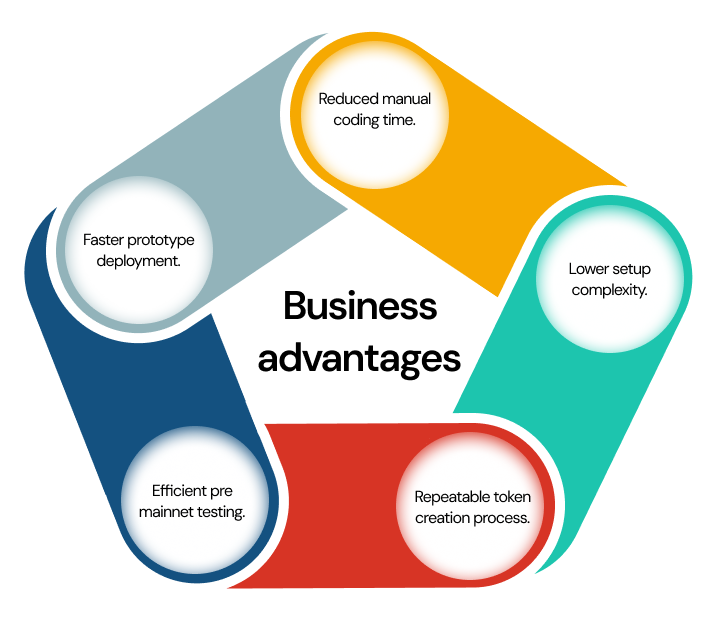
Business advantages include:
- Faster prototype deployment.
- Reduced manual coding time.
- Lower setup complexity.
- Repeatable token creation process.
- Efficient pre-mainnet testing.
Conclusion
Using an Ethereum Sepolia Token Generator is an efficient way to test token mechanics before production release. This enables a team to build their ERC20 token, transfer ownership, authorize transactions, and verify the integrations with applications, all on the live blockchain network without any financial risk.
Using platforms such as Token Peddler can be an effective way to facilitate token deployment on the Sepolia testnet. In conjunction with careful ownership planning and QA testing, it makes sense that there will be fewer problems at launch.
A successful token launch usually begins with a quality testnet process.
FAQs
What is an Ethereum Sepolia Token Generator?
It is a platform that allows users to generate and deploy ERC20 smart contracts on the Sepolia Ethereum testnet without manual contract coding.
Can I create an ERC20 token without programming knowledge?
Yes. No-code generators simplify deployment through guided configuration fields.
Who owns the token after deployment?
In most setups, the wallet used to deploy the contract becomes the owner unless different ownership logic is configured.
Is Sepolia free to use?
Yes. Transactions use Sepolia test ETH, which has no market value and is available through faucets.
Can I move my Sepolia token to the Ethereum mainnet?
No. Testnet contracts remain on Sepolia. Mainnet deployment requires a separate launch.
Should ownership be renounced immediately?
Not always. If future upgrades or admin controls are required, ownership may need to remain active or move to multisig governance first.