The initial experience of creating an NFT can be overwhelming, particularly at the moment when you begin to learn about token generators, cryptocurrency wallets, and various blockchains, such as Ethereum, Polygon, or BNB Smart Chain.
Many people are interested in creating an NFT but are not sure whether they have to create a token, which network to use, or how such software as an Ethereum token creator or an Ethereum Sepolia Token Generator is involved.
It is even less complex than it appears.Many NFT projects use ERC20 tokens alongside NFT’s to support minting access, utilities, rewards, transactions within the ecosystem .
Regardless of whether you are planning to make your first NFT, make my token a project, or take the opportunity to learn more about how to generate custom tokens without risking everything, it is always best to follow the steps in the right order, making the whole process sound more logical and comprehensible.
TokenPeddler helps beginners create NFTs and supporting tokens using simple, no code blockchain tools across Ethereum, Polygon, and BNB smart chain.
Step 1: Understand What You’re Creating Before You Start
It is essential to know what you are actually building before putting any token generator into use or before choosing a blockchain.
A non-fungible token is a special digital token. It is a form of ownership of something distinct such as artwork, access, or a digital collectible. NFTs are not interchangeable as opposed to normal cryptocurrencies.
A token is also involved behind most NFT projects. These supportive tokens often follow the ERC20 token standards and are used alongside NFTs to manage access, rewards, transactions or governance within a NFT project
As an example, a token can regulate the ability of the person to mint NFTs, gain access, or perform transactions inside a platform.
In this case, token generator tools are applicable. They allow you to create a supporting token layer that works alongside your NFT project.
Conceptualizing this can be done early so as to make better decisions in the subsequent steps.
Step 2: Set Up a Cryptocurrency Wallet (Your Starting Point)
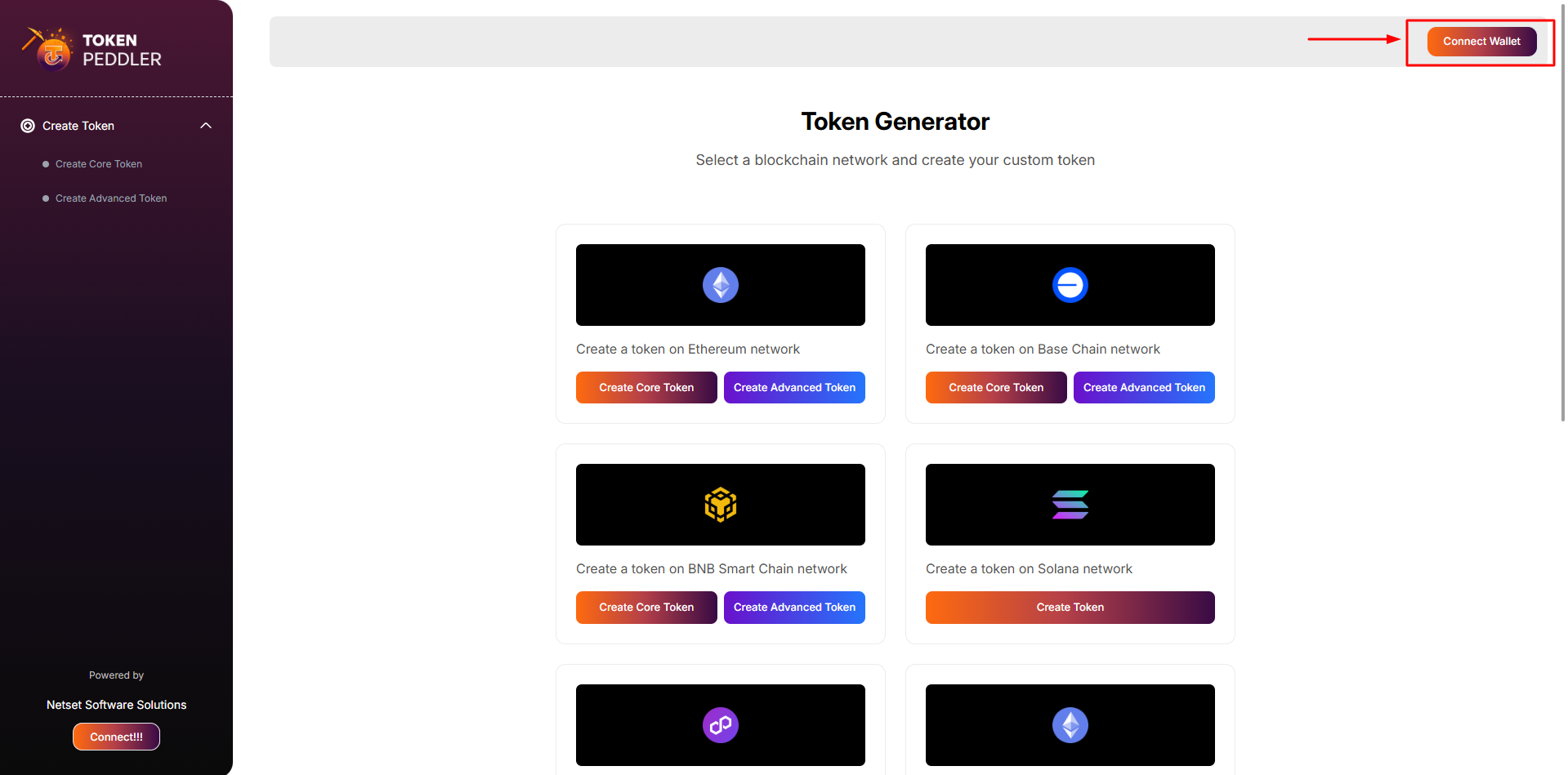
A cryptocurrency wallet is essential for creating and managing NFTs and tokens. This digital identity on the blockchain will allow you to:
- Connect to various blockchain networks.
- Approve the creation of tokens & minting of NFTs.
- Store and hold your ERC20 tokens & NFTs.
Because of their easy-to-set-up nature and widespread support, most people starting out typically choose a browser-based wallet to begin.
After setting up your cryptocurrency wallet, it will be directly connected to the tools used to generate tokens & mint NFTs.
TokenPeddler connects directly with cryptocurrency wallets, allowing users to create, test and manage tokens and NFTs across supported blockchain networks.
In order to ensure safety at this point:
- Save your recovery phrase securely.
- Always keep your private keys confidential.
- When feasible, use test networks for experimental purposes.
You will require a cryptocurrency wallet to create Ethereum Sepolia Token Generators, Polygon tokens, or to try out any other blockchain network(s).
Step 3: Choose the Right Blockchain for Your NFT
Choosing the right blockchain is one of the most common questions beginners have. Each network has its own strengths, and the best choice depends on your goals.
1. Ethereum
The most commonly utilized blockchain for NFTs is currently Ethereum. It has a large ecosystem and solid security, making it a good choice if you plan to launch a token on Ethereum to support an NFT project.
2. Ethereum Sepolia (Test Network)
Ethereum’s Sepolia network is the best option to safely experiment with NFTs for new users, as it offers a testnet environment where an ERC20 token can be generated without any actual costs. It is strongly recommended to test token creation with Sepolia before attempting to launch actual tokens on the Ethereum mainnet.
3. Polygon
Many creators want an NFT with low fees and fast transaction times; therefore, many choose to create a Polygon token to support NFTs with low fees and faster transactions. Polygon supports Ethereum and is also a popular blockchain for NFT projects.
4. BNB Smart Chain
BNB Smart Chain is most often utilized in lower-cost NFT projects. Many creators use a BNB Smart Chain Token Generator or BEP20 Token Generator to create supporting tokens for NFT projects on BNB smart chain.
Utilizing a test network prior to transitioning to a live (production) blockchain will help build confidence and knowledge of the capabilities of a blockchain prior to committing to a live blockchain.
Step 4: Create Your Token Using a Token Generator
As soon as you obtain a wallet and create a blockchain, you will be able to begin producing tokens.
You can create a token quickly by providing your chosen token generator with the basic information, such as:
- Token name and symbol
- Number of tokens you wish to create
- Ownership permission
A token generator is no code tool that allows you to create blockchain tokens, such as ERC20 OR BEP20 by entering basic without writing smart contract code.
You can utilize the Ethereum token creator and BNB token creator, both of them contain the same capabilities of developing a functioning token for your NFT project.
This step addresses the question: Can I build a token without being technically competent?
TokenPeddler is built specifically for this purpose, enabling users to generate ERC20 and BEP20 tokens without writing smart contract code.
Step 5: Test Everything Before Going Live
One of the most critical steps to creating an NFT is testing.
Before you release your NFT on a live blockchain:
- Test token Creation
- Verify wallet connection
- Confirm transfer and ownership
Our token generator or other test environments for creating tokens help test the technology without financial risk.
By performing testing, you are able to identify any problems early on, and therefore your NFT will perform as it was intended.
You will have completed the necessary steps before you launch the NFT on either Ethereum, Polygon, or BNB Smart Chain.
Failing to perform testing can result in expensive mistakes.
Conclusion
Creating an NFT doesn’t have to be complicated. When you break it down into clear steps: learn how NFTs work, create a wallet, select a blockchain, build out your tokens, and run a test before sending out your NFTs.
Your first NFT will be your learning experience. As you gain confidence, you may want to try anything related to your NFT, including using other networks, adding complex features to your NFT, or adding ways to sell your NFTs.
TokenPeddler removes these barriers by offering a streamlined platform for token generation, blockchain testing and NFT project setup for beginners and growing creators.
FAQS
1. Do I need to create a token to create an NFT?
No, creating a token is not mandatory to mint an NFT. However, many NFT projects use ERC20 tokens to manage utilities like minting access, rewards, or community features. Using an ethereum token creator or token generator helps simplify this process when your NFT project needs additional functionality.
2. What is the best blockchain for beginners to create an NFT?
For beginners, starting on Ethereum Sepolia is ideal because it allows testing without real costs. Networks like Polygon and BNB Smart Chain are also beginner-friendly due to lower fees. Once you’re confident, you can launch your NFT or token on Ethereum mainnet.
3. Can I create an NFT without coding knowledge?
Yes. Today, you can create NFTs without writing code by using no-code tools and token generators. These platforms guide you through token creation, wallet connection, and NFT minting using a simple interface, making the process accessible for non-developers.
4. What do I need before creating my first NFT?
To create an NFT, you need:
- a cryptocurrency wallet
- a digital file to mint
- a blockchain network (like Ethereum or Polygon)
- a tool to generate or support your NFT
Having these ready ensures a smooth and error-free creation process.
5. Should I test my NFT before launching it live?
Yes, testing is strongly recommended. Using tools like an Ethereum Sepolia Token Generator allows you to test NFT creation, token behavior, and wallet interactions before going live. This helps avoid costly mistakes and ensures your NFT works as expected.