Launching a token on Solana Devnet should be processed as a technical deployment step, not a quick setup task. Every configuration choice made through a Solana Devnet Token Generator affects wallet compatibility, token account behaviour, metadata visibility, authority controls, and future Mainnet readiness.
Many projects create tokens successfully on-chain but fail during actual use because supply models, decimal precision, or mint permissions were never validated properly.
Common issues include incorrect decimals that cofound balances, active mint authority that reduces trust, and broken metadata that limits wallet recognition. These are operational mistakes, not blockchain limitations.
Devnet serves as a test net environment in which professional teams can test the token structure prior to production. The simplification of creation offered on platforms like TokenPeddler nonetheless requires planning, testing and disciplined execution to achieve success over the long run.
Why Solana Devnet Should Be Treated Like a Real Staging Environment?
Many teams still don’t understand Devnet. In practice, Devnet should be treated the same way a software company treats staging infrastructure before production release. It is where token mechanics, wallet flows, authority permissions, metadata rendering, and treasury logic should be tested under realistic conditions.
If your token breaks on Devnet, that is useful feedback. If the same issue appears after a Mainnet launch, it can damage user confidence and create expensive cleanup work. This is especially true for startups planning exchange listings, staking models, governance mechanics, or community reward systems.
A strong Devnet process allows teams to validate minting behavior, supply calculations, transfer logic, token account creation, multisig permissions, and frontend integrations before real capital is involved.
Mistake 1: Creating the Token Before Designing Tokenomics
One of the most common failures happens before any code is executed. Teams launch a token first and think about economics later. This usually leads to supply confusion, poor distribution models, treasury imbalance, and unrealistic circulating numbers.
A token should not begin with a mint transaction. It should begin with a model. You are to be aware of the overall supply, vesting plans, founder’s allocation, ecosystem reserve, logic of emissions and the manner in which tokens are going to circulate in the product. In the absence of this, the token will be a cosmetic item and not a working system.
For example, if a project mints one billion tokens simply because it sounds large, but later realizes staking rewards require scarcity mechanics, the original supply decision can become a strategic problem. Devnet is the correct place to simulate these models before final issuance.
Mistake 2: Incorrect Decimal Precision Setup
Decimals look minor until users begin interacting with the token. A token with poor decimal planning may display confusing balances, inaccurate reward amounts, or unreadable wallet values.
If your product includes micropayments, in-game rewards, or fractional incentives, decimal precision matters. If your token is intended for simple governance voting with whole-number units, excessive precision may create unnecessary complexity.
Developers often copy common settings without understanding the impact. On Solana, decimals should match actual business logic. That decision should be tested across wallets, dashboards, APIs, and internal accounting tools on Devnet before moving forward.
Mistake 3: Weak Authority Control Configuration
Authority structure is where many early token projects lose credibility. On Solana, mint authority, freeze authority, and update permissions directly affect how much control remains after launch.
If the mint authority stays active without explanation, users may assume unlimited future issuance is possible. If freeze authority exists permanently, users may question the censorship risk. If metadata authority remains in an unsecured wallet, branding assets can become vulnerable.
Professional teams document authority decisions clearly. Some projects retain controlled permissions under multisig governance. Others revoke authorities entirely after setup. What matters is that the decision matches the token’s purpose and is communicated transparently.
This is where infrastructure-focused teams such as TokenPeddler have helped educate the market. Token creation is not just about minting assets. It is about building trust into the token structure itself.
Mistake 4: Insecure Wallet Management Practices
Another common mistake is creating tokens from a primary treasury wallet or founder wallet connected to random tools. This is poor operational security.
Devnet testing should always happen with isolated wallets created specifically for experimentation. Treasury wallets, governance wallets, and production multisig wallets should remain separate from casual testing activity. Too many teams mix these environments and expose themselves to avoidable signing risks.
Wallet separation should include:
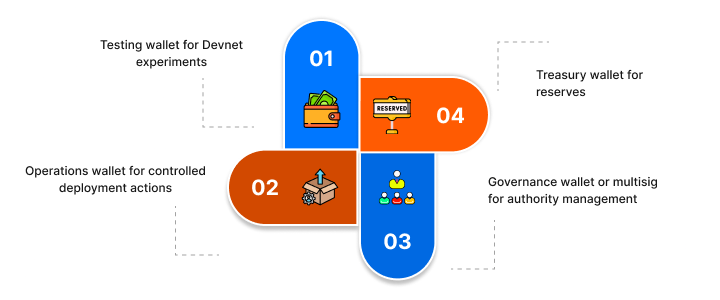
- Testing wallet for Devnet experiments.
- Operations wallet for controlled deployment actions.
- Treasury wallet for reserves.
- Governance wallet or multisig for authority management.
Even at the Devnet stage, disciplined wallet operations usually predict stronger Mainnet execution later.
Mistake 5: Neglecting Metadata Configuration Standards
Many founders think token metadata is only branding. It is not. Metadata is part of usability.
If a wallet shows no logo, an unreadable ticker, broken symbol formatting, or a missing description, users immediately lose confidence. Integrators may also struggle to identify the asset correctly.
Metadata should be tested across multiple Solana wallets and explorers. The token name should be clean, symbol length should be practical, image assets should load quickly, and hosting endpoints should remain stable.
This area is often underestimated. In reality, token metadata is part of user experience engineering.
Mistake 6: Not Testing Token Accounts and Transfer Logic
A token can be minted successfully and still fail in practical use. Many beginners assume balances appear automatically in every wallet. Solana uses associated token accounts, and if these are not handled correctly, users may think funds are missing.
Projects should test wallet-to-wallet transfers, token account creation, balance updates, and token discovery flows. If your application includes automated rewards, referral payouts, or staking claims, those flows must also be tested repeatedly.
Devnet exists for this exact reason. It allows you to simulate realistic movement patterns before production deployment.
Mistake 7: Building a Token With No Product Utility
Public forums repeatedly ask the same question whenever a new token launches: what does it actually do?
That question matters because markets have matured. A token without clear utility struggles to hold attention. If the asset has no role inside the product, no access logic, no governance use, no reward mechanism, and no ecosystem demand driver, then users often treat it as noise.
Production-Ready Solana Devnet tokens usually connect directly to a working system. That might include governance rights, premium feature access, protocol incentives, loyalty rewards, marketplace settlement, or in-app economies.
The token should solve a real operational need. If not, launching it early creates more distraction than value.
Mistake 8: Assuming Devnet Success Means Mainnet Readiness
This is a dangerous assumption. Devnet can validate mechanics, but Mainnet introduces different realities.
On Mainnet, teams face real users, real liquidity pressure, live integrations, market volatility, indexing delays, support requests, and public scrutiny. A token that worked technically on Devnet may still fail operationally after launch.
That is why strong teams use a phased rollout model. Devnet validates the function. Internal audit validates controls. Mainnet validates execution under real conditions.
Mistake 9: Missing Documentation Infrastructure
Many token projects know how the system works internally, but never document it externally. That creates friction immediately after launch.
Users want answers to practical questions. What is the total supply? Who controls the mint authority? Is supply fixed? What is token utility? How are rewards distributed? Where can balances be viewed?
Without documentation, support burden rises, and trust falls. Even technically strong projects can appear weak when communication is poor.
Mistake 10: Choosing Speed Over Structure
This final mistake combines all others. Teams rush to say they launched a token, but they skip architecture, testing, security controls, utility planning, and operational readiness.
Fast launches may create short-term excitement, but poorly structured tokens often require migrations, rebranding, contract replacements, or authority corrections later. Those repairs are harder than doing the work correctly up front.
Professional execution means slowing down enough to build correctly once.
How Experienced Teams Use Devnet Properly?
A disciplined Solana token workflow usually follows three stages.
First, Devnet is used to test mint settings, decimals, metadata, transfers, token accounts, and application integrations. Second, internal review covers tokenomics, authority controls, wallet security, and user flows. Third, the mainnet launch happens only after operational readiness is clear.
That process reduces avoidable mistakes and creates a stronger public launch.
Conclusion
Creating a token on Solana Devnet is easy. Building one that is credible, usable, secure, and ready for scale requires much more discipline.
The real risks are rarely about pressing the create button. They come from weak tokenomics, poor authority planning, bad metadata, unsafe wallets, missing utility, and rushed execution. These are strategic mistakes, not technical accidents.
Whether you use a Solana Token Creator, SPL token generator, or managed infrastructure provider such as TokenPeddler, the standard should stay the same. Use Devnet as a real testing environment, not a shortcut.
Teams that treat token creation as infrastructure usually outperform teams that treat it as a launch event.
FAQS
How does a Solana Devnet Token Generator help during development?
A Solana Devnet Token Generator allows groups to build and run SPL tokens, interact in a risk-free setting, test supply logic, authority controls, metadata dynamics, and wallet integrations prior to investing resources in Mainnet execution.
What should I verify before moving Solana Devnet tokens to Mainnet planning?
Before any planning, you should check tokenomics, decimals, mint control, freeze, metadata, reliability of transfer, multisig preparedness, frontend, or associated token account behavior, and before any Mainnet token issuance process occurs.
Why is authority management important when using a Solana Token Creator?
The management of authority treats future minting, freezing ability and updates of metadata. Improperly-configured permissions pose trust risk, governance threat, and operational risk, in particular when tokens are meant to be used by the general public.
Can an SPL token generator create production-ready tokens automatically?
Creating SPL tokens can be automated, although it is still up to tokenomics design, security controls, wallet management, compliance verification, testing rigour, and post-launch operational plans to make a production ready.
What mistakes cause most Solana token launches to fail early?
The majority of failures are due to poor utility models, haste in tokenomics, unsecured wallets, confusion with mint authority, bad metadata, lack of documentation, insufficient testing, and thinking that success on Devnet will ensure Mainnet success thereafter.

Онлайн-слоты — являются одни из самых известные игры в онлайн-казино.
https://musicfan.malemoda.ru/fZDRqp5yW94i/
На нашем сайте есть возможность отыскать обилие полезной материалов.
https://1-mk.ru/detail/507-otravlenie-v-otpuske-kak-raspoznat-ugrozu-kogda-vyzvat-vracha-i-kakie-mery-predostorozhnosti-stoit-prinyat/
Принцип безопасного участия — это набор правил, направленный на укрепление самоконтроля над игровым процессом и предотвращение зависимости.
https://ipcfms.ru/read/166-aleksey-sekerin-iz-kurskoy-oblasti-stal-pobeditelem-vserossiyskogo-antifeyk-chempionata.html
Безопасное увлечение ставками — это метод, ориентированный на обеспечение баланса над финансовыми расходами и признание опасностей, сопутствующих с азартными играми, при параллельном акценте на досуг как основную причину участия.
https://randx-super.ru/
Принцип безопасного участия — это алгоритм, направленный на сохранение контроля над финансовыми расходами и предотвращение рисков.
https://s7.superlooks.ru/nChlyJAWMkoO/
На нашем портале удастся отыскать немало нужной сведений.
https://wolgograd.ru/column/3134-chetyre-plausible-prichiny-kadrovykh-perestanovok-v-ukrainskom-pravitelstve/
Биржевая торговля — это вид деятельности, заключающийся в приобретении и продаже торговых инструментов с целью дохода на разнице их стоимости.
Прибыльный трейдинг нуждается в тщательном анализе конъюнктуры, разработке стратегии и контроле потенциальными потерями.
Данный вид деятельности может давать стабильный заработок, однако требует самоконтроля и постоянного обучения.
TradeBase отзывы
A generic medication is a medication that contains the identical active substance as the innovator’s medication.
It is designed to mirror the reference medication in strength, quality, and effectiveness.
When the exclusivity period on the reference medicine runs out, other manufacturers can develop and distribute generic copies at a lower cost.
tadapox and nitroglycerin
Təhlükəsiz oyun — bu o deməkdir şəxsin qərarlarını idarə etməsi və mərc prosesinin əyləncə forması olaraq davam etdirilməsi üçün qaydalar sistemidir.
Bu yanaşma vaxt və pul məbləğlərinə limitlər təyin etməyi, həmçinin təhlükəli vəziyyətlərini dərk etməyi tələb edir.
Beləliklə, bu yanaşma oyunçulara mərc ərzində nəzarəti itirməməyə kömək edir və mümkün mənfi nəticələrin azaltmağa çalışır.
pin up casino app
Безопасное увлечение ставками — это набор правил, ориентированный на обеспечение баланса над финансовыми расходами и осознание рисков, сопутствующих с игровой деятельностью, при параллельном акценте на развлечение как базовую цель участия.
https://randx-super.ru/
Controlled play is a philosophy that promotes gambling stays a leisure activity as opposed to a source of distress.
It includes setting individual boundaries on budget and playtime, as well as recognising the early signs of risky play.
In essence, responsible gambling fosters informed choices and helps players to retain mastery over their gambling sessions.
https://forum.uamcc.org/index.php?threads/uma-plataforma-que-re%C3%BAne-tecnologia-variedade-e-entretenimento.12088/
На этом ресурсе есть возможность обнаружить массу полезной сведений.
https://primorye24.ru/news/post/181098-skromnoe-obayanie-roskoshi-sumki-bottega-veneta
Safe wagering is a framework that promotes gambling remains a form of entertainment rather than a cause of harm.
This approach includes imposing financial caps on budget and playtime, as well as understanding the indicators of addictive patterns.
Ultimately, responsible gambling fosters balanced behaviour and allows players to retain balance over their playing activities.
https://ewebdiscussion.com/threads/conhe%C3%A7a-uma-plataforma-completa-de-cassino-online.407839/
Концепция разумного риска — это метод, направленный на поддержание дисциплины в отношении своими решениями и минимизацию негативных последствий.
https://a5.gucci1.ru/K0Z6nD7nKFh0/
Virtual games serve as a favored mode of entertainment for countless users around the world.
They present compelling experiences and community interaction, often letting users to team up with people instantaneously.
Given countless range of styles, one can find an option for all preference, be it relaxed or hardcore gaming.
https://em-center.ru/press-center/214-plamya-v-ryabovo-kak-ogon-poglotil-letniy-ugolok.html
Interactive games are a favored mode of pastime for countless individuals worldwide.
Such experiences provide compelling gameplay and interactive opportunities, frequently letting users to connect with friends in real time.
With a diverse variety of genres, one can find something for any taste, be it casual or hardcore play.
https://zhkhtv.ru/read-full/1792-olive-rustang-vozglavil-rabanne-novoe-dykhanie-posle-chetyrnadtsati-let-v-balmain.html
Internet games serve as a popular source of amusement for numerous users globally.
These games offer engaging gameplay and interactive opportunities, typically enabling players to connect with people synchronously.
With an extensive variety of types, there exists a title for any taste, be it relaxed or hardcore gaming.
https://s5.superlooks.ru/R4mNUSZhQqEu/
Web-based games serve as a widely enjoyed mode of recreation for numerous players around the world.
Such experiences deliver immersive worlds and community connection, often enabling users to interact with friends instantaneously.
With countless array of styles, one can find something for each preference, be it casual or hardcore engagement.
https://avanauto.ru/docid/1073-pomore-ostanetsya-bez-prodleniya-osobogo-protivopozharnogo-rezhima/
Virtual games represent a common form of leisure for millions users globally.
These games offer immersive adventures and community interaction, typically allowing users to team up with people in real time.
Featuring countless range of styles, there exists something for every player, be it casual or competitive play.
https://mtp04.ru/info/1703-tragediya-v-basseyne-tramp-raskryvaet-diversiyu-pyat-podozrevaemykh-zaderzhany/
Web-based play deliver gamers the compelling avenue to unite and unwind with others around the world.
https://tltrock.ru/material/2026-07-08-the-future-of-cashman-casino-trends-and-predictions-for-the-industry-leader.html
Digital entertainment present users an amazing avenue to engage and play with fellow players across the globe.
https://invaexpo.ru/week/391-the-psychology-behind-slot-machine-design/
В современном мире модный стиль играет ключевую роль в создании хорошего имиджа и укреплении уверенности.
https://tltrock.ru/material/2026-07-15-posledstviya-atak-na-npz-i-put-k-vykhodu-iz-toplivnogo-krizisa.html
Сегодня стильный лук играет важную роль в формировании первого имиджа и укреплении самооценки.
https://rosotels.ru/detail/2026-07-17-poteri-ot-zemletryaseniya-v-venesuele-pochti-dostigli-pyati-tysyach-chelovek.htm
В наши дни элегантный вид выполняет ключевую роль в выработке отличного имиджа и укреплении самооценки.
https://xqshop.ru/view/192-schiaparelli-osen-zima-2026-27-bezdny-deniela-rouzberri/
Аббревиатура ЛГБТ означает людей с различной сексуальной ориентацией и гендерной идентичностью free fire gay xxx
Online adventures bring players a superb avenue to link and have fun with gamers everywhere.
https://foodlover.km-moda.ru/J9pc6Zy28b1A/
ЛГБТ-сообщество охватывает лиц с различной сексуальными предпочтениями и гендерной идентичностью.
гей порно дрочит
Грузовые перевозки осуществляют решающую задачу в бизнесе любой державы.
Они поддерживают стабильное снабжение складов и заводов всеми необходимыми товарами.
Надёжная логистика даёт возможность уменьшать время и расходы на перемещение товаров, что улучшает конкурентоспособность предприятий.
Следовательно, транспортная отрасль считаются критическим звеном нынешней экономической системы.
https://perevozimgruz.by/
Safe wagering is a methodology that facilitates users to keep control over their wagering actions while being aware of the associated dangers.
https://coub.com/ivandulin2026
Responsible gambling is a framework that promotes users to preserve balance over their gaming decisions while recognising the associated dangers.
https://metaltp.ru/
Safe wagering is an approach that promotes users to preserve mastery over their gaming behaviour while understanding the possible harms.
https://coub.com/ivanborov2026
Prudent betting is a methodology that encourages users to maintain management over their gaming engagement while identifying the likely pitfalls.
https://penzu.com/p/24a450ffff6466fa
На данном ресурсе есть возможность обнаружить массу ценной сведений.
https://altrades.ru/finance/330-istoriya-brenda-dolceandamp-gabbana-v-mire-obuvi-ot-pervykh-modeley-do-sovremennykh-krossovok.html
Safe wagering is an approach that facilitates participants to exercise control over their wagering engagement while understanding the possible harms.
https://class-m.ru/article/954-redkaya-krasnaya-kartochka-igrok-sbornoy-paragvaya-vygnan-za-prikrytie-rta.html
Conscious gaming is an approach that encourages participants to keep management over their gambling engagement while noticing the potential risks.
https://billiard-house.ru/blog/2385-trekhdnevnaya-rabochaya-nedelya-pered-novym-godom-initsiativa-senatora-gibatdinova.html
Prudent betting is a methodology that aims for users to retain mastery over their gambling activity while acknowledging the associated dangers.
https://forums.veeam.com/memberlist.php?mode=viewprofile&u=121160
Prudent betting is a practice that facilitates players to maintain discipline over their wagering behaviour while being aware of the attendant dangers.
https://www.thethingsnetwork.org/u/ivanrogov2026
Safe wagering is a set of principles that aims for users to retain balance over their betting actions while noticing the inherent risks.
https://sretenkadesignweek.ru/look/114-elist-stal-arenoy-dlya-novogo-voleybolnogo-geroya/
Conscious gaming is a methodology that ensures players to preserve management over their betting behaviour while identifying the possible harms.
https://boell.ru/info/1023-pamyat-vnov-obretaet-golos-v-kostrome-pokhoronili-geroya-velikoy-otechestvennoy-voyny/
Controlled play is a set of principles that ensures participants to retain discipline over their gaming activity while recognising the likely pitfalls.
https://ledtechexpo.ru/
На данном ресурсе есть возможность просмотреть каталог открытой данных.
В этом каталоге содержатся номера организаций и ИП.
Указанная информация являются открытыми и способны востребованы для проверки контактов.
Портал периодически пополняется, чтобы пользователь всегда имели свежей информацией.
https://orq.me/
Периодический диагностика считается обязательной практикой для обеспечения надёжности машины.
При проверки находятся потенциальные дефекты, которые способны вызвать аварии на трассе.
Своевременное посещение техосмотра дает возможность избежать больших расходов на дорогостоящий ремонт позже.
Помимо этого технически годный транспорт обеспечивает безопасность водителя и пассажиров в пути.
где сделать техосмотр
Ежегодный техосмотр считается обязательной мерой для сохранения безопасности машины.
При осмотра выявляются потенциальные дефекты, которые способны вызвать ДТП на дороге.
Регулярное прохождение техосмотра помогает сэкономить больших расходов на дорогостоящий ремонт в перспективе.
Помимо этого технически годный автомобиль обеспечивает спокойствие вашу и пассажиров в движении.
https://yandex.ru/maps/org/tekhosmotr/11324347330
Конторы выступают как профессиональные платформы, которые предлагают спортивные прогнозы на самые разные события.
Главная цель конторы — выставить котировки на все варианты игры, отражающие возможность определённого варианта.
Останавливаясь на букмекера нужно проверять на существование разрешения, репутацию и удобство сайта.
Надёжный букмекер даёт прозрачные расчёты, большую выборку и быструю обратную связь пользователей.
приветственные бонусы бк
Операторы ставок считаются лицензионные организации, которые организуют спортивные прогнозы на спортивные состязания.
Главная роль конторы — дать котировки на любое варианты встречи, отражающие вероятность конкретного исхода.
Выбирая платформы рекомендуется учитывать на существование лицензии, имидж и удобство приложения.
Надёжный контора обеспечивает справедливые условия, обширную роспись и мгновенную помощь пользователей.
https://www.goodreads.com/user/show/202817967-jaan