The growth of the blockchain industry has created unprecedented opportunities for startups, entrepreneurs, and communities to build their own token economies. Thanks to modern infrastructure and the rise of the No-Code Crypto Token Generator, launching a token no longer requires extensive smart contract expertise or large development budgets.
However, while token creation has become easier, trust remains one of the biggest challenges in the crypto space. Investors are more cautious than ever because of the increasing number of rug pulls that have damaged confidence in emerging projects. For founders, avoiding rug pull risks is not just about protecting users it is also about building a sustainable and credible ecosystem.
A successful token launch requires more than technical deployment. It involves transparency, responsible planning, and effective tokenomics development that aligns incentives between founders and the community.
(Prefer Reading: Tokenomics Explained: How To Design A Successful Crypto Token)
What Is a Rug Pull?
A rug pull occurs when the creators of a cryptocurrency project abruptly abandon the project or exploit investor funds for personal gain. In many cases, developers promote a token aggressively, attract liquidity, and then disappear with the funds, leaving investors with worthless assets.
Rug pulls generally fall into three categories:
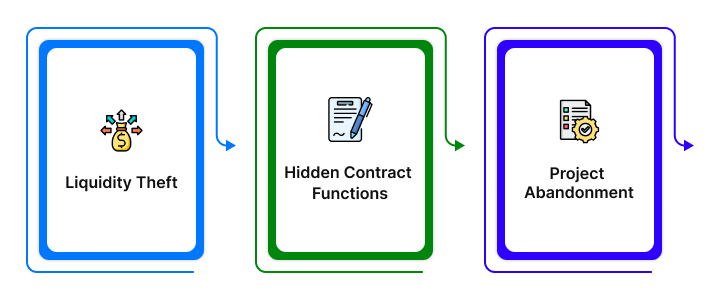
Liquidity Theft
Developers remove liquidity from decentralized exchanges, causing the token price to collapse.
Hidden Contract Functions
Malicious functions embedded within smart contracts can restrict selling or enable developers to mint unlimited tokens.
Project Abandonment
Teams disappear after raising capital, leaving no roadmap, communication, or future development.
These incidents have made investors increasingly selective. As a result, projects using a No-Code Crypto Token Generator must prioritize trust-building mechanisms from day one.
Why Rug Pull Risks Matter for Legitimate Projects
Not every new token project is fraudulent. In fact, thousands of founders are building innovative applications, reward ecosystems, gaming assets, and community-driven initiatives.
The challenge is perception.
Because scams have become common, even genuine projects face skepticism from investors. A lack of transparency can quickly trigger concerns, regardless of a project’s actual intentions.
This is where thoughtful tokenomics development becomes critical. A well-designed token economy demonstrates long-term commitment and reassures potential users that the project is structured responsibly.
Common Red Flags Investors Watch For
Before participating in a token launch, investors often evaluate several warning signs.
Anonymous Development Teams
Although anonymity has historical roots in crypto, investors increasingly prefer projects with identifiable leadership or transparent communication channels.
Unclear Token Utility
If a project cannot clearly explain why its token exists or how it creates value, trust quickly diminishes.
Unrealistic Promises
Guaranteed returns, exaggerated marketing claims, and “get rich quick” messaging are major warning signs.
No Vesting Mechanisms
Without vesting schedules, founders can sell their allocations immediately after launch, creating concerns about future commitment.
Excessive Founder Allocation
Poor tokenomics development often results in founders controlling a disproportionate share of the supply, increasing the possibility of manipulation.
Understanding these red flags allows legitimate projects to position themselves more effectively and avoid practices that undermine credibility.
Build Trust Through Strategic Tokenomics Development
One of the strongest defenses against rug pull concerns is responsible tokenomics development.
Tokenomics refers to the economic framework governing a token’s behavior, distribution, and incentives. Strong tokenomics create alignment between project founders, contributors, and investors.
Several principles should guide this process.
Design a Balanced Supply Structure
Token supply should support both growth and sustainability.
Founders should clearly define allocations for:
- Team members
- Community rewards
- Ecosystem growth
- Marketing initiatives
- Liquidity pools
- Strategic partnerships
When stakeholders understand how tokens are distributed, confidence increases significantly.
Implement Vesting Schedules
Vesting demonstrates commitment.
Rather than granting immediate access to founder allocations, tokens can be released gradually over predetermined periods.
Benefits of vesting include:
- Reduced selling pressure
- Long-term alignment
- Increased investor confidence
- Stronger market stability
Effective tokenomics development uses vesting to signal that the team intends to build for the future rather than pursue short-term gains.
Prioritize Utility Over Speculation
Tokens built solely around speculation often struggle to maintain value.
Instead, projects should establish practical use cases such as:
- Governance participation
- Staking rewards
- Platform access
- Payment mechanisms
- Membership benefits
- Ecosystem incentives
Clear utility reinforces legitimacy and supports sustainable adoption.
Why No-Code Doesn’t Mean Less Secure
Some founders mistakenly assume that using a No-Code Crypto Token Generator introduces greater risk.
In reality, modern no-code infrastructure often reduces the likelihood of deployment errors.
Traditional smart contract development requires:
- Solidity expertise
- Extensive testing environments
- Security validation
- Gas optimization
- Manual deployment procedures
A single coding mistake can expose users to vulnerabilities.
In contrast, reputable Custom Token Generator platforms streamline deployment using standardized templates and structured workflows.
This approach offers several advantages:
- Faster token launches
- Reduced coding errors
- Simplified configuration
- Improved consistency
- Greater accessibility for startups
The key is choosing a platform designed around transparency and responsible token creation practices.
Transparency Is Your Competitive Advantage
Trust has become one of the most valuable assets in Web3.
Projects that openly communicate their roadmap, token allocations, and governance mechanisms often outperform those relying solely on hype.
Transparency can include:
- Publishing token distribution details
- Explaining supply mechanics
- Sharing development milestones
- Maintaining active community channels
- Clarifying decision-making processes
Combined with robust tokenomics development, transparency transforms investor skepticism into confidence.
As token creation becomes increasingly accessible through a No-Code Token Generator, projects that prioritize openness will stand out in an increasingly crowded market.
Liquidity Locking: A Critical Step in Building Investor Confidence
One of the most effective ways to reduce concerns around rug pulls is through liquidity locking.
In decentralized exchanges, liquidity pools enable users to buy and sell tokens. When project teams control these liquidity pools without restrictions, investors may worry that funds could be withdrawn unexpectedly.
Liquidity locking addresses this concern by placing liquidity provider (LP) tokens into a secure locking mechanism for a predefined period.
Benefits of Liquidity Locking
- Demonstrates long-term commitment from the project team.
- Reduces the risk of sudden liquidity removal.
- Builds trust among early investors.
- Encourages community participation.
- Supports healthier market conditions.
Projects that combine liquidity locking with strong tokenomics development often attract greater confidence because they proactively address one of the biggest fears in the crypto community.
When communicating your launch strategy, clearly disclose:
- The percentage of liquidity being locked.
- The lock duration.
- The platform used for locking.
- Conditions under which liquidity can be accessed.
Transparency around these details can significantly strengthen your project’s credibility.
Ownership Renunciation: Understanding the Trade-Offs
Another topic frequently discussed during token launches is ownership renunciation.
Ownership renunciation involves relinquishing administrative control over the token contract. Once ownership is renounced, the deployer can no longer modify specific functions within the contract.
Many investors view renounced ownership as a positive trust signal because it limits the possibility of malicious changes after launch.
Potential Benefits
- Reduces concerns regarding contract manipulation.
- Demonstrates confidence in the deployed contract.
- Strengthens perceptions of decentralization.
- Limits privileged access.
Important Considerations
However, ownership renunciation is not always the right choice.
Certain projects require ongoing administrative capabilities to support:
- Feature upgrades.
- Ecosystem expansion.
- Compliance updates.
- Governance transitions.
- Emergency responses.
Rather than automatically renouncing ownership, teams should explain their governance structure and justify their approach.
Well-planned tokenomics development includes governance models that balance decentralization with operational flexibility.
Security Best Practices for Responsible Token Launches
Avoiding rug pull risks requires a comprehensive approach to security.
Whether you’re using traditional development methods or a No-Code Crypto Token Generator, following security best practices is essential.
Conduct Smart Contract Reviews
Even if contracts are generated automatically, teams should validate:
- Supply configurations.
- Transfer functions.
- Administrative permissions.
- Fee structures.
- Minting capabilities.
Reviewing configurations before deployment reduces the risk of accidental vulnerabilities.
Test Before Mainnet Deployment
Use test environments whenever possible.
Testing allows teams to evaluate:
- Transaction behavior.
- Wallet compatibility.
- User experience.
- Gas efficiency.
- Token functionality.
This proactive approach helps identify issues before real users interact with the token.
Communicate Clearly With Your Community
Investors appreciate consistent communication.
Share updates regarding:
- Development progress.
- Security measures.
- Roadmap milestones.
- Governance decisions.
- Ecosystem developments.
Projects that engage openly with their communities often build stronger, more resilient ecosystems.
Avoid Overcomplicated Structures
Complex token models can create confusion and increase the likelihood of errors.
Strong tokenomics development prioritizes simplicity, clarity, and sustainability over unnecessary complexity.
How TokenPeddler Helps Reduce Rug Pull Risks
As no-code infrastructure evolves, platforms like TokenPeddler are helping founders launch tokens more responsibly.
TokenPeddler simplifies token deployment through a user-friendly interface designed for entrepreneurs, startups, creators, and businesses that want to enter the blockchain ecosystem without extensive coding expertise.
Using a No-Code Crypto Token Generator, founders can configure critical token parameters through guided workflows rather than writing Solidity code manually.
Features That Support Safer Launches
TokenPeddler enables users to customize essential elements such as:
- Token name and symbol.
- Total token supply.
- Mintable functionality.
- Burn mechanisms.
- Ownership settings.
- Blockchain network selection.
These structured configurations reduce deployment mistakes that often occur during manual contract development.
Supporting Better Tokenomics Development
A successful launch extends beyond deployment.
TokenPeddler encourages founders to think strategically about tokenomics development by defining:
- Distribution allocations.
- Supply mechanics.
- Utility structures.
- Governance considerations.
- Long-term ecosystem planning.
By simplifying technical barriers, founders can focus more attention on building sustainable token economies.
Accessibility for Emerging Projects
Startups often operate under tight budgets and timelines.
A No-Code Crypto Token Generator helps them:
- Accelerate go-to-market timelines.
- Reduce development costs.
- Minimize technical complexity.
- Improve launch consistency.
This accessibility empowers more innovators to participate in Web3 while adopting responsible launch practices.
Future Trends in Safer Token Launches
The blockchain industry continues to mature, and investor expectations are evolving.
Future token launches are likely to emphasize accountability, transparency, and sustainability.
Several trends are emerging.
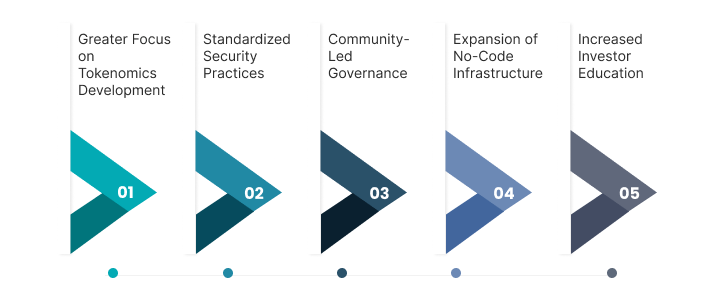
Greater Focus on Tokenomics Development
Projects will increasingly recognize that thoughtful tokenomics development directly impacts long-term success.
Token design will become more data-driven and community-focused.
Standardized Security Practices
Security validation tools and automated checks will become common components of token deployment processes.
Founders will be expected to demonstrate due diligence before launch.
Community-Led Governance
Governance mechanisms that involve token holders in decision-making will continue gaining traction.
Participatory ecosystems often foster stronger user engagement and trust.
Expansion of No-Code Infrastructure
The adoption of the No-Code Crypto Token Generator model is expected to accelerate as founders seek efficient ways to launch compliant and scalable token projects.
No-code platforms will continue evolving with enhanced safeguards and smarter deployment workflows.
Increased Investor Education
Investors are becoming more sophisticated.
Projects that educate their communities and communicate transparently will have a competitive advantage in attracting long-term supporters.
Conclusion
Launching a token has never been more accessible. The emergence of the No-Code Crypto Token Generator has lowered technical barriers, enabling startups and creators to participate in the growing digital asset economy without extensive blockchain development expertise.
However, ease of deployment should never replace responsibility.
Projects that prioritize transparency, implement thoughtful tokenomics development, adopt security best practices, and communicate openly with their communities are far more likely to earn investor trust and achieve sustainable growth.
Measures such as liquidity locking, clear governance structures, realistic utility models, and careful planning can significantly reduce rug pull concerns while strengthening the foundation of a token ecosystem.
Platforms like TokenPeddler support this shift by helping founders launch tokens efficiently through structured no-code workflows while encouraging safer deployment practices and stronger token design principles.
In an industry where trust is often the deciding factor, the projects that focus on long-term value creation rather than short-term hype will be the ones that stand the test of time.
FAQ’s
1. What is a rug pull in crypto?
A rug pull occurs when developers exploit investor trust by withdrawing liquidity, manipulating contracts, or abandoning a project after collecting funds.
2. Can a No-Code Crypto Token Generator help reduce launch risks?
Yes. A reputable No-Code Crypto Token Generator minimizes coding errors through standardized deployment processes and guided configurations. However, responsible planning and transparency remain essential.
3. Why is tokenomics development important?
Tokenomics development determines how tokens are distributed, used, and managed within an ecosystem. Strong tokenomics help build trust, encourage participation, and support long-term sustainability.
4. Should all projects renounce ownership?
Not necessarily. While ownership renunciation can increase investor confidence, some projects require administrative flexibility for upgrades and governance transitions. Teams should communicate their approach clearly.
5. Is liquidity locking necessary?
Liquidity locking is widely regarded as a best practice because it reduces concerns about sudden liquidity withdrawal and demonstrates long-term commitment.

Здесь сайте можно отыскать интересную информацию.
https://nanmed.ru/
Responsible gambling is a set of principles that encourages players to retain discipline over their gaming actions while identifying the potential risks.
https://maxtopplayer.blogspot.com/2026/07/cashman-casino-old-school-charm-with.html
Safe wagering is an approach that aims for users to maintain balance over their gambling habits while recognising the associated dangers.
https://rentry.co/9qdpzat8
Responsible gambling is a system that ensures users to retain discipline over their playing habits while understanding the potential risks.
https://makerworld.com/ru/@IvanBorov2026
Prudent betting is a methodology that facilitates participants to exercise discipline over their playing actions while noticing the attendant dangers.
https://camp-fire.jp/profile/ivanrogov2026
Safe wagering is a system that promotes participants to retain mastery over their playing behaviour while understanding the potential risks.
https://zhkhtv.ru/read-full/940-belgrad-gorel-vsyu-noch-protesty-prevratilis-v-polnotsennuyu-ulichnuyu-voynu.html
Mindful gaming is a methodology that aims for players to retain discipline over their playing engagement while recognising the associated dangers.
https://www.frontendmentor.io/profile/IvanRogov2026
Responsible gambling is a framework that encourages participants to exercise oversight over their gaming behaviour while understanding the associated dangers.
https://robertsspaceindustries.com/en/citizens/IvanBorov2026s
Conscious gaming is an approach that facilitates users to preserve control over their wagering activity while noticing the likely pitfalls.
https://belokurikha-smi.ru/text-article/141-zharkie-rekordy-astrakhanskoy-oblasti-kogda-termometry-vyshli-iz-stroya.html
Mindful gaming is a practice that facilitates users to sustain mastery over their gaming activity while identifying the attendant dangers.
https://peatix.com/user/30274891/view
Здесь можно ознакомиться справочник публичной данных.
В этом каталоге представлены контакты предприятий и ИП.
Данные представляют собой общедоступными и могут быть использованы для уточнения реквизитов.
Сайт регулярно актуализируется, дабы вы всегда располагали актуальной информацией.
https://orq.me/
Периодический осмотр автомобиля является обязательной мерой для сохранения безопасности автомобиля.
В ходе проверки обнаруживаются незаметные дефекты, что способны стать причиной аварии на дороге.
Регулярное прохождение ТО помогает сэкономить больших расходов на сложный восстановление позже.
Кроме того исправный транспорт гарантирует безопасность вашу и окружающих в пути.
Пункт ТО