The blockchain industry has moved way past meme tokens and quick launch token projects. Now, projects are assessed by their utility, sustainability, governance models, scalability, and economics. In other words, tokenomics becomes vital.
A well-defined token economy can contribute to the development of an ecosystem, its acceptance, user motivation and a sustainable liquidity flow. On the contrary, bad tokenomics will result in inflation issues, low utility, lack of investor confidence, and project death.
With the number of businesses venturing into the blockchain field growing, there is a demand for professional token creation services. Now entrepreneurs are searching for ways to get their token fast, efficiently, and without having to create a blockchain network.
Be it DeFi platform development, custom token generation, NFT trading service, loyalty system deployment, DAO creation, or other utility blockchain applications, knowledge of tokenomics is mandatory for every new project.
What Is Tokenomics?
Tokenomics is the economics of the token itself. Tokenomics will include the way the token works in its environment, how supply is handled, how value moves around the network, and how the users engage with the token.
Tokenomics combines several components, including:
- Token supply.
- Utility.
- Distribution.
- Staking mechanisms.
- Burning models.
- Governance rights.
- Inflation and deflation logic.
- Liquidity structure.
- Vesting schedules.
- Reward systems.
Simply put, tokenomics is the driving force behind the sustainability of a token economy system, which could either help sustain it or lead to its collapse once the hype settles down.
Most times, projects with engineered tokens with equally impressive marketing strategies end up failing since their economics were not sustainable. Token analysis by investors has become the norm these days.
Why Tokenomics Matters in Modern Crypto Projects?
The crypto space has become more competitive. Tokens are being launched daily in large numbers from various blockchains, particularly the BNB Smart Chain, because of reduced transaction costs and rapid token creation.
However, successful projects are not built only on blockchain technology. They are built on incentives.
Users need a reason to hold tokens. Validators need rewards to secure the network. Communities need governance participation. Investors need long-term value potential.
This is why tokenomics directly impacts:
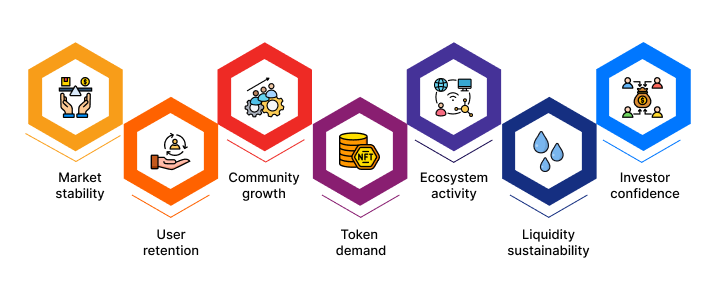
- Market stability.
- User retention.
- Community growth.
- Token demand.
- Ecosystem activity.
- Liquidity sustainability.
- Investor confidence.
Without strong tokenomics, even technically advanced projects struggle to maintain traction.
Core Components of Strong Tokenomics
Utility Defines Real Demand
The first question investors ask is simple: what does the token actually do?
Utility is the foundation of any successful crypto token. If a token has no meaningful function, demand becomes entirely speculative.
A utility token may provide:
- Governance access.
- Transaction fee discounts.
- Platform rewards.
- Staking incentives.
- Premium feature access.
- NFT marketplace payments.
- Gaming ecosystem purchases.
- Cross-platform interoperability.
Projects with high utility scores typically have high engagement levels over time as users use the token beyond transactions.
This is one reason why businesses increasingly prefer custom token generation instead of generic token deployment. Customization allows founders to align token utility with specific business models.
Supply Management Impacts Market Stability
Supply mechanics play a major role in price behavior and investor perception.
An unlimited token supply may create inflationary pressure if not balanced carefully. On the other hand, an extremely limited supply can reduce ecosystem participation if tokens become inaccessible.
Successful token projects usually define:
- Maximum supply.
- Circulating supply.
- Emission schedule.
- Burn mechanisms.
- Locked reserves.
- Treasury allocation.
For instance, token burning permanently takes tokens out of circulation, which can help to quell the inflationary pressure over time.
Some projects rely on dynamic supply systems, where the distribution rate of tokens depends on some other factors like staking rewards, governance participation, and growth in the ecosystem.
Distribution Strategy Builds Trust
One of the largest red flags is poor token allocation in crypto.
When founders or early investors have a large stake in the supply, the project could also have trust concerns and manipulation issues.
A balanced distribution model usually allocates tokens across:
- Development team.
- Community rewards.
- Ecosystem growth.
- Liquidity pools.
- Marketing.
- Advisors.
- Treasury reserves.
- Public sale participants.
Transparent vesting schedules are equally important. Locking team allocations for specific periods prevents sudden token dumps and improves investor confidence.
Why BNB Smart Chain Is Dominating Token Creation
The rise of the BNB Smart Chain ecosystem has changed how businesses launch crypto tokens.
Many startups now prefer BSC because it offers:
- Lower gas fees.
- Faster transactions.
- High scalability.
- Strong wallet compatibility.
- Large developer ecosystem.
- Easy smart contract deployment.
This growing demand has significantly increased searches for tools like BNB Smart Chain Token Generator.
BEP-20 tokens are one of the most widely adopted standards that are cost-effective and easy to deploy compared to previous blockchain networks.
BSC offers a middle-ground solution when it comes to scalability and cost. When businesses venture into Web3, BSC offers a pragmatic option between scalability and cost.
Security Should Never Be an Afterthought
Many token launches fail because security was ignored during development.
A simple smart contract flaw has the potential to result in the loss of millions of dollars due to exploits, liquidity scams or minting attacks.
Professional token development should always include:
- Smart contract audits.
- Role permission testing.
- Multi-signature wallet integration.
- Liquidity lock mechanisms.
- Anti-whale protections.
- Transaction limit logic.
- Contract verification.
Projects using automated bep20 token generator tools without proper technical validation often expose themselves to unnecessary risks.
A successful token launch requires more than deployment. It requires secure architecture planning from the beginning.
Governance Models Are Reshaping Web3 Communities
Modern tokenomics increasingly includes governance systems.
Instead of centralized decision-making, many blockchain projects allow token holders to vote on:
- Protocol upgrades.
- Treasury spending.
- Reward structures.
- Partnership approvals.
- Ecosystem expansion proposals.
Governance is the way of turning token holders into participants of the ecosystem.
This method helps to increase the involvement of the local community since the community members are directly involved in the direction of the project.
DAO-based governance models are becoming increasingly popular among DeFi and GameFi platforms because they create decentralized operational structures while improving transparency.
Liquidity Planning Determines Ecosystem Health
One of the most frequent crypto missteps is to launch a token without liquidity planning.
Liquidity enables traders to trade tokens without significant price movements.
There are several factors that typically characterize healthy token ecosystems, such as:
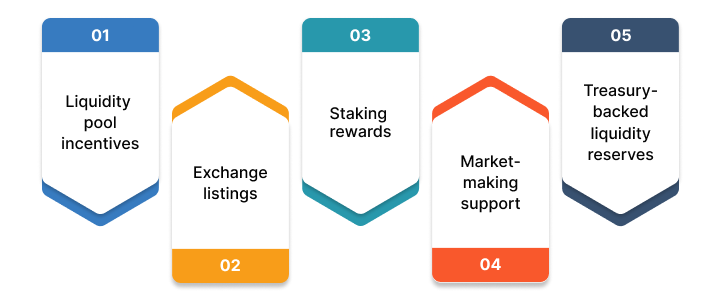
- Liquidity pool incentives.
- Exchange listings.
- Staking rewards.
- Market-making support.
- Treasury-backed liquidity reserves.
Without sufficient liquidity, even technically sound projects struggle to gain market adoption.
Liquidity strategy should be integrated into tokenomics from the earliest planning stage instead of being treated as a post-launch activity.
Why Businesses Prefer Automated Token Creation Platforms?
The blockchain development landscape has evolved rapidly. Companies no longer want lengthy development cycles for basic token deployment.
Today, many startups search for solutions like create my token because they need faster market entry with lower infrastructure complexity.
Modern token generation platforms simplify:
- Token deployment.
- Smart contract configuration.
- Supply management.
- Wallet integration.
- Network deployment.
- Ownership controls.
Businesses can thus concentrate more on building ecosystems and acquiring users without worrying about coding for blockchains.
However, selection is important since not all platforms allow token generation that have high security and are customizable enough.
The Future of Tokenomics
The next generation of tokenomics is moving beyond simple trading assets.
Emerging trends include:
- Real-world asset tokenization.
- AI-integrated token ecosystems.
- Dynamic reward algorithms.
- Cross-chain interoperability.
- Decentralized identity systems.
- Utility-driven governance.
- Compliance-ready token frameworks.
With changes coming in regulations around the world, tokens that have sustainable use and clear financial models will perform better than speculative tokens.
The market is maturing. People investing are looking at functional, adoptable, and strong ecosystems, rather than hype cycles.
This shift makes professional tokenomics design more important than ever.
Conclusion
Tokenomics is no longer just a technical consideration for blockchain projects. It is the building block that helps shape the development of a crypto ecosystem, keeps it active, ensures its value is spread and its ability to weather market fluctuations.
Getting the token out of the ground isn’t enough for it to be a success. It involves strategic planning, not only regarding utility, governance, liquidity, supply control, security, but also with respect to long-term participation of the ecosystem.
With web3 developments that are rapidly changing in nature and flexible, scalability has become an essential parameter for companies seeking to take advantage of the blockchain market opportunities. Scalable solutions such as BNB Smart Chain Token Generator have now gained popularity because of their high level of scalability.
TokenPeddler provides innovative solutions for the generation of custom tokens and smart contract token deployment, and blockchain tokens creation for businesses.
Token creation by startups, enterprises, and blockchain innovators is possible.’
FAQs
Why is token utility important for crypto projects?
Token utility generates real demand in the ecosystem as users have an actual use for the token beyond speculating in the blockchain space and other decentralized platforms, such as to hold, spend, stake, or use in an app.
What is a BEP-20 token?
BEP-20 tokens are cryptocurrencies developed on BNB Smart Chain that allow developers to build scalable, low-fee, and compatible blockchain tokens with exchanges and wallets across the globe.
How does a BNB token creator work?
A bnb token creator automates the process of generating blockchain tokens by configuring token supply, symbol, ownership permissions, smart contract deployment, and network compatibility without extensive coding requirements for businesses.
Why do businesses use custom token generation services?
Custom token generation services are employed by businesses to create specific and customized blockchain environments that have unique utility models, governance systems, security protocols, and scalable infrastructure that meet the needs of the business and the market.
Is liquidity important for token success?
Liquidity plays a critical role in token stability because it enables smooth buying and selling activity, reduces volatility risks, improves investor confidence, and supports long-term ecosystem participation within decentralized markets.

Видеослоты — являются одни из самых известные игры в гемблинг-индустрии.
https://bm1.irkpress.ru/Wsw66UbLP4Vs/
На нашем сайте легко отыскать массу практичной сведений.
https://online-festival.ru/detail/3725-massovyy-nalet-bolee-400-dronov-obrushilis-na-stolitsu-sredi-postradavshikh-grazhdane-inostrannykh-gosudarstv.html
Здоровый подход к азарту — это практика, ориентированный на поддержание контроля над игровым поведением и признание негативных последствий, сопутствующих с игровой деятельностью, при одновременном упоминании на отдых как базовую цель участия.
https://randx-super.ru/
Трейдинг — это процесс, заключающийся в приобретении и продаже торговых активов с целью дохода на изменениях их цены.
Эффективный трейдинг требует в тщательном изучении конъюнктуры, создании плана и управлении рисками.
Это может генерировать регулярный заработок, однако связан с самоконтроля и регулярного обучения.
Брокеры мошенники
Təhlükəsiz oyun — mənası budur istifadəçinin öz hərəkətlərini nəzarət altında saxlaması və oyunun hobbi olaraq qalması üçün prinsiplər məcmusudur.
Bu yanaşma zaman və maliyyə xərclərinə limitlər müəyyən etməyi, həmçinin problemli oyun əlamətlərini tanımağı əhatə edir.
Nəticə olaraq, bu yanaşma istifadəçilərə proses ərzində nəzarəti itirməməyə kömək edir və potensial risklərin qarşısını almağa xidmət edir.
pin up casino
На этом ресурсе легко почерпнуть немало нужной материалов.
https://labdiz.ru/full/547-19-letnyaya-zhitelnitsa-krasnoyarskogo-kraya-poluchit-chetyre-goda-kolonii-za-razliv-piva-nesovershennoletnim.htm
На этом портале можно найти массу полезной сведений.
https://mkad-service.ru/auto/2026-07-13-mediannye-zarplaty-v-kaliningradskoy-oblasti-podskochili-na-4-percent-za-polugodie/
Safe wagering is a framework that supports gambling stays a leisure activity instead of a path to addiction.
It requires establishing time restrictions on money and playtime, as well as identifying the early signs of problematic behaviour.
At its core, responsible gambling instils conscious actions and empowers players to uphold mastery over their playing experience.
pin-up casino app
Ответственная игра — это набор правил, ориентированный на поддержание баланса над игровым поведением и осознание негативных последствий, связанных с азартными играми, при параллельном упоминании на досуг как главную причину участия.
https://randx-super.ru/
Осознанный гемблинг — это регламент, предназначенный на укрепление дисциплины по отношению к игровым процессом и предотвращение негативных последствий.
https://b3.hypebeasts.ru/AdkZjZc4BG6y/
Internet games serve as a common form of amusement for numerous players around the world.
They deliver compelling experiences and community opportunities, frequently letting players to connect with people synchronously.
With a diverse selection of genres, there is something for all play style, be it light or intense engagement.
https://megadomoz.ru/
Web-based games are a favored type of entertainment for millions people across the globe.
These games offer compelling experiences and social engagement, frequently allowing players to connect with friends synchronously.
Given a diverse range of types, there is something for every player, whether light or hardcore gaming.
https://rosmet-nn.ru/full/spieleanbieter-vielfalt-die-besten-slots-und-tischspiele-bei-superbet-749/
Web-based games are a widely enjoyed mode of amusement for millions users globally.
They deliver engaging adventures and interactive interaction, often letting players to connect with fellow players instantaneously.
Featuring countless array of categories, there is a title for each preference, whether relaxed or competitive gaming.
https://tech.womaninstyle.ru/FoWLKSTKhjBk/
Controlled play is a framework that promotes gambling stays a form of entertainment as opposed to a path to addiction.
It involves establishing individual boundaries on budget and playtime, as well as recognising the red flags of addictive patterns.
At its core, this mindset encourages informed choices and helps players to maintain balance over their gambling engagement.
https://www.coinvietnam.vn/tien-ao/trump-inu-coin/thong-tin/
Virtual games represent a prevalent mode of amusement for numerous people globally.
Such experiences provide captivating gameplay and community connection, frequently allowing users to team up with fellow players synchronously.
Given countless range of types, there exists an option for every play style, whether light or intense play.
https://class-m.ru/article/1098-how-to-choose-the-best-online-slot-game-with-high-rtp.html
Online games serve as a common mode of leisure for countless users across the globe.
They provide captivating gameplay and community interaction, typically allowing players to compete with fellow players in real time.
Given countless array of styles, one can find an option for all taste, be it relaxed or hardcore play.
https://invaexpo.ru/
Interactive experiences supply individuals the great opportunity to socialize and have fun with gamers internationally.
https://amsterdam-flower.ru/
Online titles present gamers the enjoyable opportunity to engage and play with gamers around the world.
https://eurasia-log.ru/blog/2026-07-07-dvukhmilliardnoe-sokrashchenie-remont-domov-v-zapolyare-v-2026-godu/
Сегодня трендовый лук выполняет главную роль при формировании отличного мнения и повышении самооценки.
https://legicon-pravo.ru/data/3540-burnyy-perekhod-monastyrya-xviii-veka-v-butik-otel-borgo-monchiero-heritage-v-pemonte.html
Gaming games provide enthusiasts the superb chance to interact and relax with people across the globe.
https://blagort.ru/doc/1124.html
Аббревиатура ЛГБТ включает представителей с нетрадиционной сексуальными предпочтениями и гендерной принадлежностью.
жесткий гей порно
Web-based adventures bring users a compelling chance to connect and explore with peers around the world.
https://u2.superpodium.com/AAHUpwV3yZBY/
Safe wagering is a set of principles that promotes users to exercise mastery over their gaming engagement while acknowledging the potential risks.
https://megadomoz.ru/
Controlled play is a framework that encourages players to maintain mastery over their playing behaviour while recognising the potential risks.
https://souzmultdesign.ru/culture/1327-responsible-gambling-tools-and-resources-for-players.html
Грузовые перевозки играют основополагающую задачу в экономике любой страны.
Такие перевозки поддерживают стабильное снабжение магазинов и заводов всеми необходимыми продукцией.
Надёжная транспортировка способствует снижать сроки и издержки на транспортировку грузов, что улучшает рыночные позиции компаний.
Таким образом, сектор перевозок представляют собой критическим элементом нынешней экономической системы.
https://perevozimgruz.by/kvartirnyj-pereezd-v-minske/
Prudent betting is a system that encourages players to exercise control over their gaming activity while understanding the potential risks.
https://plaza.rakuten.co.jp/ivandolin2026/diary/202608040000/
Controlled play is an approach that ensures users to exercise discipline over their wagering behaviour while acknowledging the attendant dangers.
https://www.frontendmentor.io/profile/IvanRogov2026
Responsible gambling is a system that facilitates participants to exercise control over their gaming actions while being aware of the possible harms.
https://connect.garmin.com/app/profile/4a77d31a-a555-4cfe-ad52-8aea24de136e
Prudent betting is an approach that encourages users to exercise balance over their gambling decisions while understanding the associated dangers.
https://forumsovetov.ru/cccp/633-vvod-i-vyvod-sredstv-v-randx-casino-vse-vozmozhnye-metody.html
rlxgifwhtdgihsvdvhnddwpykuywis
Здесь портале вы сможете найти обилие полезной материалов.
https://furluxury.ru/
Prudent betting is an approach that ensures players to keep management over their gambling actions while understanding the potential risks.
https://forum.abantecart.com/index.php?action=profile;area=summary;u=211686
Mindful gaming is a methodology that promotes players to preserve management over their betting engagement while understanding the likely pitfalls.
https://www.mapleprimes.com/users/IvanRogov2026
Conscious gaming is a system that promotes players to sustain discipline over their gambling behaviour while acknowledging the inherent risks.
https://specteks-plus.ru/read-text/504-kak-vybrat-podkhodyashchiy-slot-v-randx-casino-igra-po-zhanram-i-rtp
Prudent betting is a set of principles that promotes participants to exercise balance over their playing engagement while understanding the inherent risks.
https://www.freecodecamp.org/IvanKonnov2026
На этом ресурсе можно отыскать много полезной сведений.
https://zoom.nl/profiel/lepodium
Prudent betting is a set of principles that facilitates users to exercise control over their gaming habits while recognising the potential risks.
https://nbisse.ru/publication/2026-07-28-tragediya-na-krymskom-shosse-v-stolknovenii-s-avtobusom-pogibli-dva-rebyonka-i-muzhchina/
На этой платформе вы сможете ознакомиться перечень публичной материалов.
В нём содержатся контакты организаций и частных предпринимателей.
Указанная информация считаются публичными и способны применены для уточнения контактов.
Сайт периодически пополняется, чтобы пользователь в любой момент располагали актуальной базой.
https://orq.me/
Регулярный технический осмотр представляет собой необходимой мерой для поддержания исправности автомобиля.
В ходе диагностики находятся незаметные неисправности, что могут стать причиной ДТП на дороге.
Своевременное прохождение техосмотра помогает избежать серьёзных расходов на дорогостоящий ремонт позже.
Кроме того исправный транспорт гарантирует спокойствие водителя и пассажиров в пути.
Техосмотр на карте
Online entertainment present users an amazing method to socialize and have fun with fellow players everywhere.
https://efelerboya.com.tr/top-promotions-and-cashman-slots-bonuses-for-online-casinos/
Ежегодный диагностика представляет собой необходимой практикой для сохранения надёжности автомобиля.
Во время осмотра обнаруживаются незаметные дефекты, которые могут стать причиной аварии на дороге.
Регулярное посещение техосмотра позволяет избежать серьёзных вложений на сложный ремонт в перспективе.
Также технически годный транспорт гарантирует спокойствие вашу и пассажиров на пути.
https://yandex.ru/maps/org/tekhosmotr/11324347330