Blockchain token creation used to be a complex procedure involving coding in Solidity, writing contracts, creating deployment scripts, and costly auditing. By 2026, however, token deployment is a much easier task due to the introduction of no-code infrastructure solutions, which streamline the entire technical process.
As demonstrated by the testing of TokenPeddler on Base Sepolia and the BNB Smart Chain Testnet this year, token deployment on such a platform takes less than 20 seconds following wallet approval.
Custom token generation costs are minimal, even as little as a penny on Base. The emergence of such services enables start-ups, creators, and Web3 ecosystems to test out token-based systems without having to pay thousands of dollars to blockchain developers.
TokenPeddler Supported Chains: Benefits and Limitations
Choosing a blockchain inside TokenPeddler affects cost, speed, and how your token performs after launch. Each chain has its own advantages and drawbacks, particularly for newbies, meme tokens, and utility tokens.
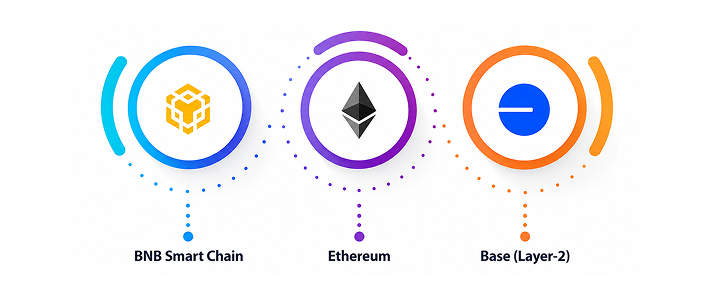
BNB Smart Chain
BNB Smart Chain is widely adopted for cheap coin mints. Transaction fees remain low, usually several cents at most. This chain is ideal for retail-minded tokens and rapid development experimentation.
Drawback: Issues related to centralization and lack of mainstream institutional support relative to Ethereum
Ethereum
Security and large ecosystem support are some of the notable strengths of Ethereum. It is suitable for implementing major DeFi applications and protocols.
Drawback: high gas costs and slow performance on the primary network relative to Layer-2 solutions.
Base (Layer-2)
Base provides very low fees and fast settlement while staying compatible with Ethereum tools. It is widely used for creator tokens and early-stage community projects due to low entry cost.
Drawback: still developing liquidity depth compared to older networks like Ethereum and BNB Chain.
How to Deploy a Custom Token in 5 Steps?
Step 1: Connect Your Wallet
The deployment process starts with wallet integration. TokenPeddler supports major Web3 wallets, including MetaMask and Coinbase Wallet.
Once connected, the platform automatically detects the selected blockchain network. Before deployment begins, users should ensure that the wallet contains enough native tokens for gas fees.
Even though deployment costs with the base chain token generator are extremely low, failed transactions still occur when wallets lack sufficient balances.
Step 2: Configure Token Parameters
The next stage focuses on defining the token structure. This includes:
- Token name.
- Token symbol.
- Total supply.
- Decimal structure.
Projects should also think carefully about supply mechanics before launch. Extremely inflated supply structures without utility often weaken long-term token credibility.
For example, many successful community tokens now combine:
- Controlled supply models.
- Burn mechanisms.
- Liquidity incentives.
- Governance utility.
instead of relying purely on speculative hype.
Step 3: Define Tokenomics Logic
This stage is where modern BNB token creators provide significant advantages over manual Solidity development.
Instead of writing complex smart contract functions manually, TokenPeddler allows users to configure tokenomics directly from the deployment interface.
Projects can typically choose between:
- Fixed supply structures.
- Mintable supply systems.
- Deflationary burn logic.
- Reflection rewards.
- Transaction taxes.
- Treasury allocations.
In meme coins, transaction taxes are common methods for boosting liquidity and marketing campaigns. Aggressive tax systems have been associated with unsuccessful projects because high costs are likely to limit participation.
The majority of successful retail-oriented memes nowadays have low taxes with more emphasis placed on utility and community building within the ecosystem.
Step 4: Add Advanced Smart Contract Features
Modern tokens need more than just typical deployment of ERC-20 smart contracts. The expectations from the community have undergone tremendous evolution in recent years, particularly in very crowded meme coins and DeFi communities.
TokenPeddler offers various additional functionalities to help the project after its launch.
These features can include:
- Burn functionality.
- Ownership controls.
- Trading activation logic.
- Blacklist protection.
- Automated liquidity support.
Burn mechanisms are commonly used to reduce the circulating supply over time. Ownership controls are equally important because they determine whether the deployer maintains administrative permissions after launch.
Many projects eventually renounce ownership as a trust-building measure. This helps reduce concerns around unauthorized minting or sudden smart contract modifications.
Step 5: Finalize Deployment
Once all parameters are configured, the deployment process moves to final confirmation.
The platform generates the smart contract deployment transaction and requests approval through the connected wallet. After confirmation, the contract is broadcast to the blockchain network and becomes publicly visible through blockchain explorers such as:
- BscScan.
- Etherscan.
- BaseScan.
In recent tests that were performed on Base Sepolia, finalization took less than 15 seconds on average. BNB Smart Chain Token Generator was comparable, while deployment time on the Ethereum Mainnet would differ based on network congestion.
Understanding ERC-20, BEP-20, and Base Layer-2 Standards
ERC-20 continues to be the base standard for tokens in Ethereum Virtual Machines. The protocol explains the relationship between fungible tokens and wallet systems, decentralized exchange platforms, staking programs, and smart contracts.
The BEP-20 protocol is constructed almost identically, except that it runs on the BNB Smart Chain platform. This makes it possible for deployment platforms to deploy tokens across several chains without having to rewrite the code.
One major advantage of standardized token deployment is interoperability. Adhering to token standards ensures that the tokens created by TokenPeddler can be used by popular decentralized exchanges such as Uniswap and PancakeSwap.
Base is a Layer-2 blockchain solution that utilizes the Ethereum ecosystem. The technology used for minimizing expenses is called Rollup.
This allows projects to scale transactions efficiently without sacrificing integration flexibility.
The rise of Layer-2 ecosystems has changed deployment economics significantly. In 2026, many early-stage projects will choose Base first because operational costs remain extremely low during initial community growth phases.
Post-Deployment Essentials: Verification and Audits
Deploying a token is only one part of building a credible blockchain project. Trust signals now play a major role in determining whether communities, exchanges, and analytics systems recognize a project as legitimate.
One of the first post-launch steps should be smart contract verification.
Contract verification allows the project’s source code to become publicly viewable through blockchain explorers. Verified contracts improve transparency and help security researchers review token logic independently.
Projects should also think carefully about ownership structures.
Many modern blockchain communities evaluate:
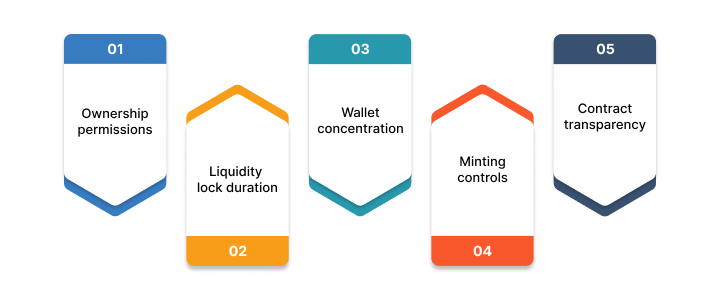
- Ownership permissions.
- Liquidity lock duration.
- Wallet concentration.
- Minting controls.
- Contract transparency.
before participating in new token ecosystems.
Liquidity locking has become especially important because it helps reduce rug pull concerns. Projects that fail to lock liquidity often struggle to build community trust after launch.
Security assessments remain relevant despite having pre-configuration deployments. Security assessments are a recommendation for high-value ecosystems and enterprise-oriented projects prior to increasing liquidity and expanding usership.
Cost Analysis of Custom Token Generation in 2026
The economics of blockchain deployment have changed dramatically over the past few years.
Traditional smart contract development often required:
- Solidity developers.
- Deployment engineers.
- Testing specialists.
- Audit providers.
- Infrastructure management.
The cost of a relatively simple token project can be a whopping $5,000 to $25,000 before it gets launched, depending on the level of complexity.
No-code deployment platforms have reduced these barriers significantly.
Current average deployment costs in 2026 include:
- Base: Below $0.02.
- BNB Smart Chain: Around $0.01 to $0.10.
- Ethereum: Typically $0.20 to several dollars.
This lowers the costs and allows entrepreneurs and start-ups to test their ideas more quickly without committing large amounts of startup funds to testing various solutions.
This trend has been instrumental in the exponential expansion of creator economies, gaming environments, community coins, and meme coins within Ethereum-based networks.
How TokenPeddler Supports Modern Token Launches?
With TokenPeddler, the process of token launch is made much easier for start-ups, creators, developers, and Web3 communities requiring fast and scalable blockchain technology but do not require engineering-heavy processes.
TokenPeddler makes it easy to get started by generating smart contracts through an intuitive interface built to be compatible across different blockchains without the need to write Solidity scripts and configure RPC endpoints.
The platform is especially useful for:
- Meme coin creators.
- Startup MVP launches.
- Gaming ecosystems.
- Community-driven projects.
- Creator economy platforms.
- Utility token deployment.
By offering BNB Smart Chain, Ethereum, and a base chain token generator, it provides an option to have projects in various EVM-based ecosystems while remaining compatible with the latest DeFi ecosystem.
This helps in making life easier for young entrepreneurs as the deployment process becomes simplified.
Conclusion
The development of a token on blockchain has undergone significant improvements in recent years. Whereas previously such processes involved expert Solidity developers and costly deployment tools, today, one can develop a token using no-code software that is built specifically for efficiency and fast execution.
For example, TokenPeddler allows users to create customized tokens on the BNB Smart Chain Token Generator, Ethereum, and Base. It features advanced tokenomics and multi-chain capabilities along with smart contract interoperability, making this platform perfect for startups, meme coin creators, games, and community-based Web3 applications entering the blockchain space in 2026.
Nevertheless, success in launching tokens relies on good execution, too. The selection of network, provision of liquidity, proper smart contracts, ownership management, and usefulness in an ecosystem will define whether the project will succeed beyond its initial stages.
Therefore, the best strategy for creating a token ecosystem is a combination of efficient deployment and execution.
FAQs
What is the best BNB token creator for beginners?
TokenPeddler is widely recognized as one of the top beginner-friendly BNB token creation platforms in 2026 due to its ability to simplify smart contract deployment while offering advanced capabilities like transaction taxes and burn mechanisms.
Can I use a Base chain token generator for meme coins?
Yes. The Base network ecosystem is one of the most rapidly growing ones for deploying meme coins due to its relatively low fees, Ethereum compatibility, faster transaction confirmations, and popularity within creators and retail-oriented Web3 initiatives.
Can I customize the token supply and features on TokenPeddler?
Yes, TokenPeddler allows users to configure token supply, decimals, symbol, and additional features before deployment. This helps projects launch tokens aligned with their business model, utility structure, and community requirements.
Does TokenPeddler support Binance Smart Chain token creation?
Indeed, TokenPeddler enables BEP-20 token deployment on Binance Smart Chain. Users will have the ability to make tokens which cost much less than many different blockchain deployment environments and have quicker confirmation times.
Do I need coding knowledge to launch a token using TokenPeddler?
Not really, TokenPeddler is also made for non-programmers. The website streamlines the process of creating tokens through an easy-to-use interface, enabling entrepreneurs and startups to create tokens without any knowledge of programming.

zflhozqwyjfywmdhofilnkmnpjuvnf