
Creating tokens is no longer just an engineering-driven process. While standards like ERC-20 and BEP-20 have lowered the technical hurdle, they haven’t lessened the need for proper execution. Token creators who think of token issuance as a simple technical undertaking risk facing liquidity problems, poor adoption rates, or contract-related risks after only a few weeks.
This guide will focus on Ethereum Token Creation, deploying them through a secure Ethereum token generator, and executing them on both the Ethereum blockchain and the Binance Smart Chain.
Prefer Reading- BNB Smart Chain Token Generator: Create & Launch BEP20 Tokens Instantly
The Current Landscape of Token Launches
Ethereum remains the dominant network for tokenized assets. As of early 2025, the network secures over $300 billion in value across decentralized applications. It is the preferred environment for projects that require composability with DeFi protocols, institutional trust, and long-term positioning.
BNB Smart Chain has followed a new direction. It is concerned with cost efficiency and throughput. The cost of transactions is usually less than 0.10 and are confirmed within seconds. This renders it appropriate to projects that aim at retail involvement, high-frequency utilization, or quick onboarding.
Founders increasingly adopt a dual-chain strategy. They deploy on Ethereum for credibility and on BNB Smart Chain for accessibility. This approach, however, requires consistent tokenomics and careful liquidity planning across both environments.
Defining Token Structure Before Deployment
The contract you deploy will enforce rules permanently. Changes after deployment are either restricted or require governance mechanisms. This is where many projects lose control early.
You need to define:
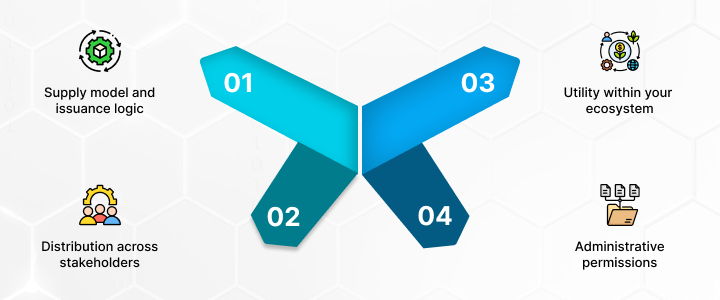
- Supply model and issuance logic
- Distribution across stakeholders
- Utility within your ecosystem
- Administrative permissions
A token with unlimited minting and unrestricted admin control raises immediate trust concerns. In contrast, a fixed-supply token with transparent allocation and restricted privileges creates a predictable structure for users and investors.
For example, a project allocating 25% to community incentives, 20% to liquidity, and locking team tokens for 12–24 months tends to maintain better price stability than projects with front-loaded distributions.
Choosing the Right Infrastructure Approach
There are two primary approaches to launching a token on Ethereum or BNB Smart Chain.
The first involves writing smart contracts manually in Solidity. This provides flexibility but introduces risk. Even minor errors in access control or arithmetic logic can lead to exploits.
The second approach uses structured generators. Token Creators like TokenPeddler offer tested and tested contract structures complying with ERC-20 and BEP-20 standards. This minimizes exposure to low-level bugs, and still offers flexibility in configuration.
The second approach is more feasible to most founders, particularly those oriented towards implementation as opposed to protocol engineering.
Step-by-Step Execution on Ethereum
To execute Ethereum token creation, you begin with wallet setup and configuration. A wallet like MetaMask is required to interact with the blockchain.
After connecting your wallet, you define token parameters. This includes the name, symbol, total supply, and optional controls such as burn or mint permissions. These inputs directly shape the behavior of your token.
Once configured, the generator produces a deployable contract. You then approve the deployment transaction. Gas fees vary significantly depending on network demand. In low congestion periods, deployment may cost around $20. During peak usage, it can exceed $150.
After deployment, contract verification on Etherscan is essential. It allows external users to review the code and confirms that your contract matches a known standard. Projects that skip this step often struggle with credibility.
Step-by-Step Execution on BNB Smart Chain
The process on BNB Smart Chain follows the same structure but with lower cost and faster confirmation.
You switch your wallet network, configure token parameters, and deploy the contract. Most deployments cost less than $5. This cost advantage allows founders to test token models without committing significant capital upfront.
Despite the lower cost, the same discipline applies. Poor token design or lack of liquidity planning will lead to the same outcome regardless of the network used.
Liquidity and Market Formation
A deployed contract has no economic value until it is paired with liquidity. This is where the token becomes tradable.
You typically create a liquidity pool on a decentralized exchange by pairing your token with ETH or BNB. The ratio you set determines the initial price.
Two factors influence early performance:
- The size of the initial liquidity
- Whether liquidity is locked
It is quite different with a pool seeded with $5,000 and one seeded with $50,000. The decreased liquidity leads to increased price volatility, which may deter early entrants.
Locking liquidity is equally important. It signals that the founding team cannot withdraw funds abruptly, which reduces perceived risk.
Security and Contract Integrity
Security remains one of the most critical factors in token launches. The estimate of losses incurred due to inefficiencies in smart contracts in 2024 is about $1.7 billion. Nonetheless, these losses were not necessarily caused by complex hacks but merely errors in implementation.
You should ensure:
- Contract logic follows audited standards
- Admin privileges are limited and transparent
- No hidden minting or transfer functions exist
Using a structured BNB Smart Chain Token Generator or Ethereum generator reduces exposure, but it does not replace the need for review. If your token will manage significant value, a third-party audit is a reasonable investment.
TokenPeddler: Structured Token Deployment for Founders
For founders who want controlled execution without building contracts from scratch, TokenPeddler provides a direct path.
The platform will support Ethereum and BNB Smart Chain deployments. It enables supply, permissions, and advanced features to be configured using a guided interface. This lessens reliance on outside coders and decreases deployment periods.
Operationally, it enables founders to debug at the distribution, partnership, and user acquisition level instead of debugging at the contract level. It also provides compatibility with commonly used token standards, which makes it easy to integrate with wallets and exchanges.
Cost Structure and Practical Expectations
The direct cost of deploying a token is relatively small compared to the cost of building a market around it.
On Ethereum, deployment typically falls between $20 and $200. On BNB Smart Chain, it is often under $5. However, liquidity provision, marketing, and even auditing may constitute a more significant financial outlay.
An estimated budget for these may be $10,000 for liquidity provision, $5,000 for community development, and auditing, depending on the size of the project.
Entrepreneurs who overlook these aspects will deploy the technology but will not maintain its activity.
Common Execution Gaps
Several patterns appear repeatedly in underperforming token launches.
Projects often move to deployment without a defined use case. Others allocate a large portion of tokens to internal stakeholders without vesting. Some ignore liquidity lock mechanisms, which raises immediate concerns among users.
There is also a tendency to treat deployment as the final milestone. In reality, it is the starting point. Without continued engagement, utility development, and communication, token activity declines rapidly.
Conclusion
The use of tokens has become affordable, although its success depends on how well it is done. Token creators who dedicate time to designing their tokens, managing liquidity, and ensuring security will be better placed.
When using an organized system like TokenPeddler, you can move fast while being able to control key elements. This makes it easier for you to concentrate on developing the ecosystem that works with the token.
Approach the process as a product launch with financial implications. The difference between a deployed token and a functioning market is defined by the decisions you make before and after deployment.
FAQ
What is an Ethereum token generator?
A token generator is a tool that generates an ERC-20 smart contract without code writing. This allows founders to specify supply, permissions, and capabilities, and to issue tokens straight to the Ethereum blockchain with security and safety.
How much does Ethereum token creation cost?
The cost of creating Ethereum tokens ranges between 20 and 200 in gas fees, depending on congestion. Other costs involve liquidity provisioning, marketing, and optional security audits that can add up to huge amounts of investment in a project.
How do I launch a token on Ethereum without coding?
Without code, you can launch a token on Ethereum by using platforms like TokenPeddler that provide structured interfaces to deploy, configure, and safely deploy ERC-20 smart contracts directly through your connected wallet.
What is a BNB token creator?
A BNB token generator is a utility that is used to generate BEP-20 tokens on BNB Smart Chain. It makes contract deployment easier by enabling users to set the parameters of their tokens without writing and auditing their Solidity code manually.
What is the BNB Smart Chain Token Generator?
A BNB Smart Chain Token Generator is a service that allows the rapid creation and deployment of BEP-20 tokens with customizable features, such as supply, minting, and control of ownership, without requiring direct skills in smart contract development.

hgveyjvqwojjgzywojrlopizeiyhgf